


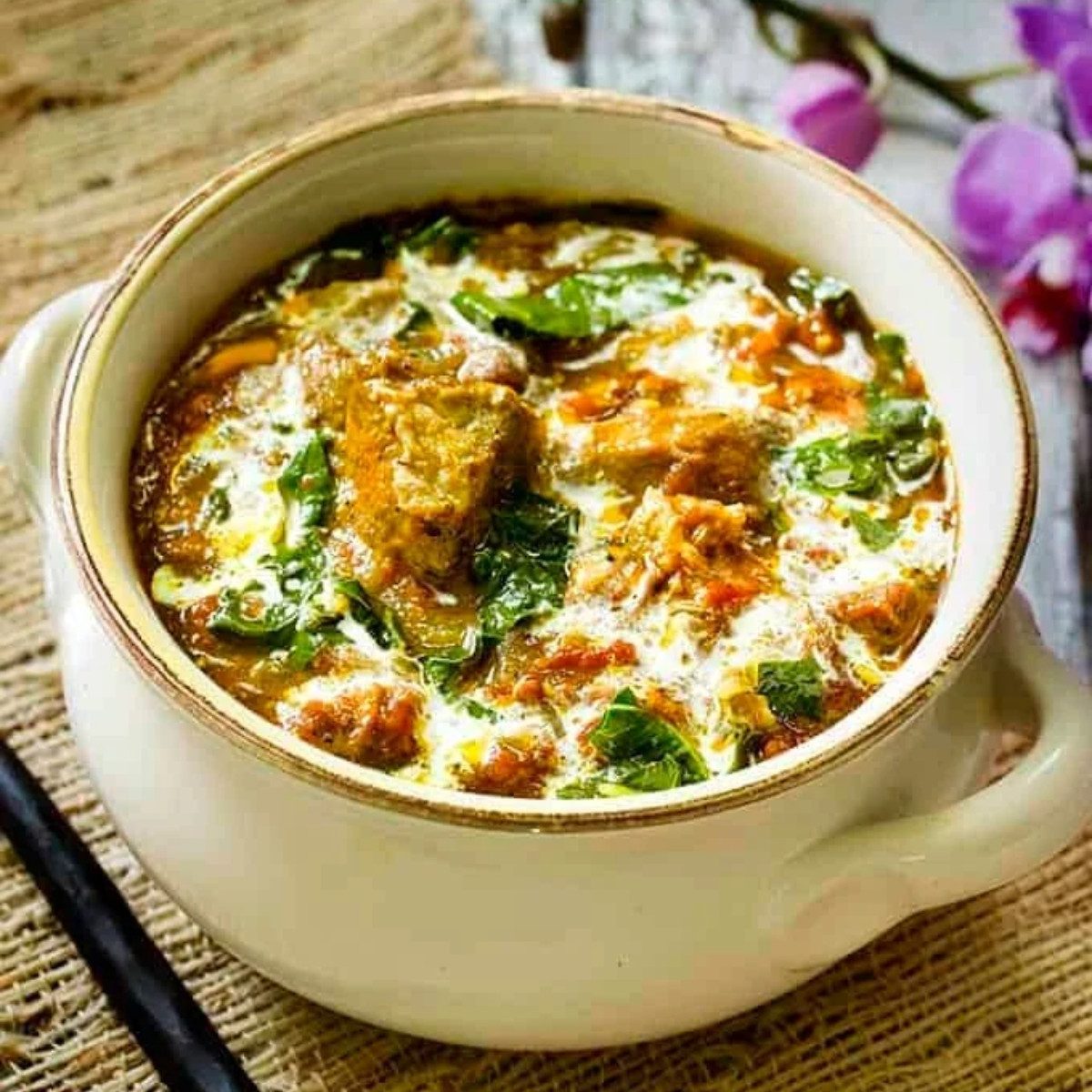
This Pork Curry combines tender pork shoulder, baby spinach, tomato paste, cream, garlic, ginger, and warm Indian spices. Make this low-carb pork saag in the Instant Pot for a fast pressure-cooker dinner or simmer it on the stovetop until the pork is fork-tender.
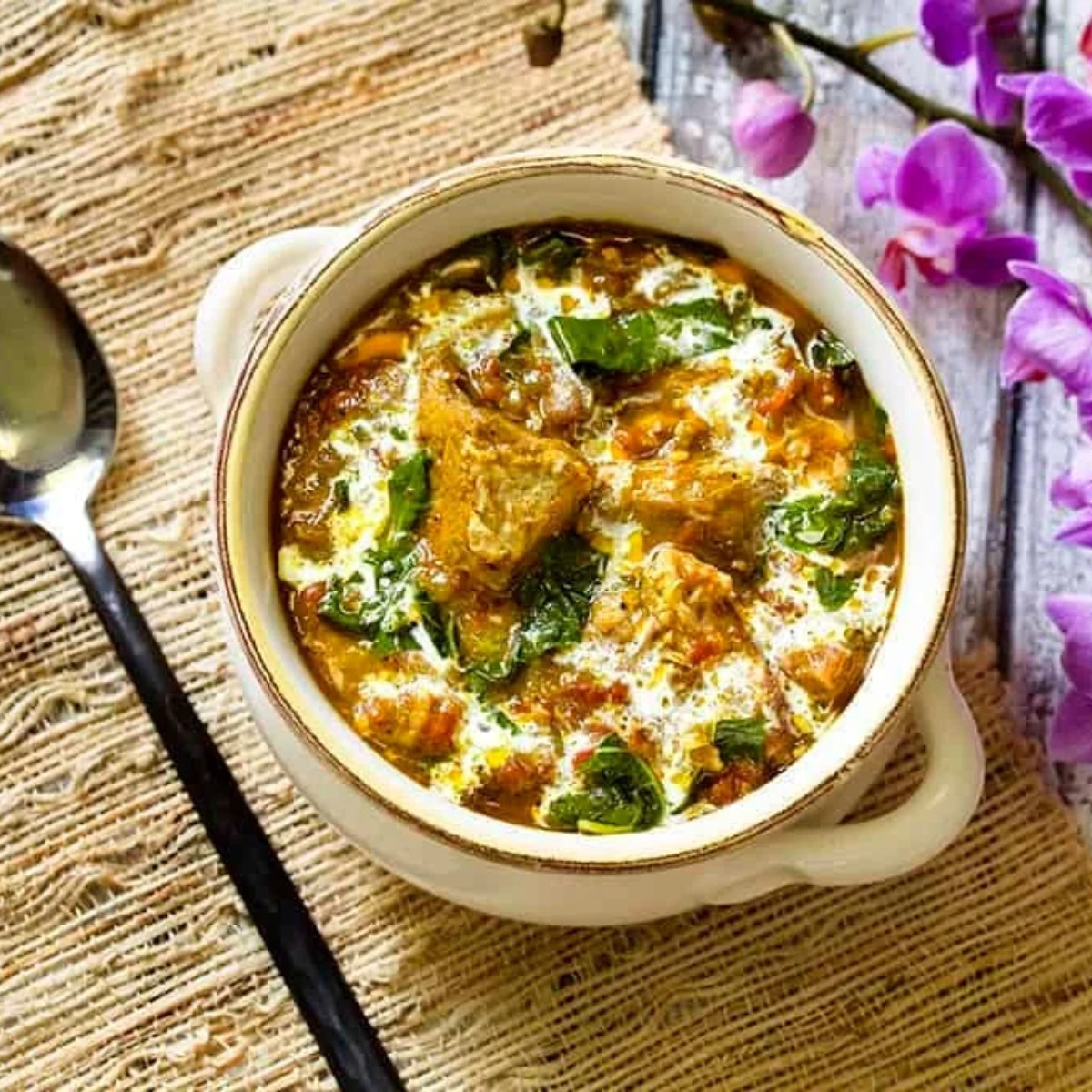
Pork may not be the first protein you think of for curry, but pork shoulder works beautifully here. It has enough fat and connective tissue to remain juicy while absorbing the garam masala, turmeric, ginger, garlic, and tomato flavors.
The result is a rich pork and spinach curry with only a small amount of sauce. Serve it with Instant Pot basmati rice or keep the meal lower in carbohydrates with cauliflower rice.
Why You'll Love This Pork Curry
- Fast. Once the pork has marinated, the pressure cooker makes quick work of a cut that normally requires a longer simmer.
- Easy. Sauté the marinated pork, pressure cook it, and finish it with spinach.
- Low carb. Only about one net carbohydrate per serving.
- Tender. Marbled pork shoulder becomes soft and juicy under pressure.
- Flavorful. Garlic, ginger, turmeric, cayenne, garam masala, and tomato paste create a warm, savory curry.
- Vegetable packed. Five ounces of baby spinach cook down directly into the sauce.
- Flexible. Make the recipe in an Instant Pot or on the stovetop.
Explore more quick meals ready in 30 minutes or less and my collection of low-carb recipes.
What Is Pork Saag?
Saag is a broad term used for dishes made with leafy greens. Depending on the cook, region, season, and recipe, those greens may include mustard greens, spinach, fenugreek leaves, collards, or other varieties.
Because this particular recipe uses baby spinach, it is best described as a pork and spinach curry or saag-inspired pork curry. It is not meant to represent every regional saag preparation.
If you want to learn how sauces and seasonings vary among dishes, read this guide to Indian curry types or browse more Instant Pot curry recipes.
What Does Pork Curry Taste Like?
This curry is savory, earthy, creamy, and moderately spicy. Turmeric adds earthiness and color, while garam masala supplies warm aromatic notes. Garlic, ginger, and tomato paste give the sauce depth, and cayenne adds chile heat.
The spinach balances the richness of the pork and half-and-half. It also gives the finished curry its green color and slightly earthy flavor.
This recipe is not sweet, coconut-forward, or heavily sauced. If you want a mild tomato-and-cream curry, try my famous Instant Pot Butter Chicken. For a milder, aromatic dish, make Chicken Korma.
What Cut of Pork Is Best for Curry?
Boneless pork shoulder is the best choice for this recipe. It contains enough marbling and connective tissue to remain juicy during pressure cooking and becomes tender enough to break apart easily.
Pork shoulder may also be labeled:
- Pork butt
- Boston butt
- Shoulder roast
- Boneless pork shoulder roast
Cut the pork into evenly sized, bite-size cubes so the pieces cook at the same rate.
Pork loin and pork tenderloin are much leaner. They are not direct substitutes for pork shoulder because the tested pressure-cooking time may leave them dry or overcooked.
If you have additional pork shoulder, use it to make Pressure Cooker Pork Chile Verde.
Ingredients You'll Need
For the Pork Marinade
- Boneless pork shoulder. Marbling helps the meat remain tender and flavorful during pressure cooking.
- Half-and-half. Adds dairy richness and helps distribute the spices around the pork. Half-and-half is not highly acidic, so most of the tenderness comes from the cut and cooking method rather than the dairy alone.
- Garlic. Adds savory depth and pungency.
- Ginger. Supplies warmth and a fresh aromatic note.
- Turmeric. Adds earthy flavor and golden color.
- Cayenne pepper. Provides heat. Reduce it if you prefer a milder curry.
- Kosher salt. Seasons the pork throughout the marinating period.
- Garam masala. Adds aromatic warmth from a blend of spices. For the freshest flavor, make this homemade garam masala.
For Cooking and Finishing
- Ghee or oil. Helps sauté the pork and tomato paste. Homemade ghee gives the curry a rich, nutty flavor.
- Tomato paste. Provides concentrated tomato flavor, acidity, color, and body.
- Water. Deglazes the pot and creates enough thin liquid for pressure cooking.
- Baby spinach. Adds color, texture, and leafy greens without requiring extensive preparation.
- Additional half-and-half. An optional garnish that makes the finished curry look creamier and softens the spice.
If you are missing a seasoning, use this Indian spice substitutions guide rather than making an unrelated one-to-one swap.
What Goes Into the Pork Curry Marinade?
The marinade includes the half-and-half, garlic, ginger, turmeric, cayenne, kosher salt, and garam masala.
Mix those ingredients together first, then add the pork and stir until every piece is evenly coated. Cover and refrigerate the pork for at least 30 minutes or up to 24 hours.
Do not include the ghee, tomato paste, water, or spinach in the marinade.
How to Make Pork Curry in the Instant Pot
- Cut the pork. Trim only excessive surface fat from the pork shoulder. Cut the meat into evenly sized, bite-size cubes.
- Mix the marinade. In a bowl, combine the half-and-half, garlic, ginger, turmeric, cayenne, kosher salt, and garam masala.
- Marinate the pork. Add the pork and stir until evenly coated. Cover and refrigerate for at least 30 minutes or up to 24 hours.
- Heat the Instant Pot. Select Sauté. When the pot is hot, add the ghee or oil.
- Cook the pork and tomato paste. Add the pork with all of its marinade and stir in the tomato paste. Cook for 5 to 10 minutes, stirring frequently, until the pork is lightly seared and the tomato paste is incorporated.
- Deglaze thoroughly. Pour in the water and scrape the bottom of the inner pot until no browned tomato paste, dairy, or pork residue remains stuck to it. This helps prevent a burn warning.
- Pressure cook. Secure the lid, close the pressure-release valve, and cook at High Pressure for 10 minutes.
- Prepare the spinach. While the pork cooks, roughly chop the baby spinach.
- Release the pressure carefully. When the cooking cycle ends, quick-release your Instant Pot. If the valve spits liquid, pause and release the pressure in controlled bursts.
- Add the spinach. Open the lid away from your face. Stir in the chopped spinach until it is evenly distributed.
- Finish cooking. Secure the lid again and cook at High Pressure for an additional two minutes. Allow the pressure to release naturally.
- Finish and serve. Stir well. Taste and adjust the salt only if necessary. Garnish with a small drizzle of half-and-half, if desired.
If you are unsure which pressure-release method to use, review my guide to Instant Pot natural release versus quick release.
How to Make Pork Curry on the Stovetop
- Combine the half-and-half, garlic, ginger, turmeric, cayenne, salt, and garam masala.
- Add the pork shoulder, stir well, cover, and refrigerate for 30 minutes to 24 hours.
- Heat the ghee or oil in a heavy-bottomed saucepan or Dutch oven over medium heat.
- Add the pork with its marinade and the tomato paste.
- Cook, stirring frequently, until the tomato paste is evenly incorporated and the pork is lightly browned.
- Add the water and scrape the bottom of the pan to release any browned residue.
- Cover and simmer gently until the pork is fork-tender. Stir occasionally and add a small amount of water only if the pan becomes dry before the pork is tender.
- Stir in the chopped spinach.
- Simmer until the spinach is wilted and incorporated into the curry.
- Taste, adjust the seasoning, and garnish with additional half-and-half if desired.
Tips for Making the Best Pork Saag
- Use pork shoulder. Lean pork cuts do not behave the same way during pressure cooking.
- Cut uniform pieces. Evenly sized cubes are more likely to become tender at the same time.
- Marinate in the refrigerator. Never leave pork marinating at room temperature.
- Use fresh spices. Old turmeric, cayenne, and garam masala will produce a flat-tasting curry.
- Sauté carefully. Dairy and tomato paste can stick, so stir frequently.
- Deglaze completely. Scrape away every stuck bit before pressure cooking.
- Do not add spinach at the beginning. Adding it later helps preserve more color and texture.
- Taste before salting. The marinade already contains up to two teaspoons of kosher salt.
- Let the curry rest briefly. A short rest allows the sauce to settle and cling more closely to the pork.
- Adjust the final consistency. If the sauce is thin, simmer it on Sauté after pressure cooking. If it is too thick, stir in a small amount of water or half-and-half.
For more help with seasoning or consistency problems, read how to fix Indian curry.
Why Is My Pork Curry Tough?
Pork curry is usually tough because the meat has not cooked long enough for its connective tissue to soften, the cubes were cut too large, or a lean cut was substituted for pork shoulder.
If pork shoulder is still tough after the full cooking cycle, return it to High Pressure for a few additional minutes and retest the tenderness.
Why Did My Instant Pot Show a Burn Warning?
Dairy, tomato paste, and spices can stick to the bottom of the Instant Pot during sautéing. If that residue remains in place, the cooker may detect excessive heat before it reaches pressure.
After adding the water, scrape the bottom of the inner pot thoroughly. The surface should feel smooth before you secure the lid. You may also want to verify that the sealing ring, float valve, and pressure-release valve are installed correctly.
Why Is My Pork Curry Watery?
Pork and spinach both release moisture as they cook. The curry may also appear thinner immediately after pressure cooking.
Select Sauté and simmer the uncovered curry, stirring frequently, until it reaches the desired consistency. Avoid adding flour or cornstarch slurry because it will change the recipe's carbohydrate count and texture.
Why Did the Half-and-Half Separate?
Dairy can separate when it is exposed to high heat or strong acidity. The curry is still generally usable if the flavor and food safety are otherwise acceptable, but the sauce may look grainy.
Stirring thoroughly may help bring the sauce back together. A small amount of fresh half-and-half added after cooking can also improve its appearance. Do not boil the curry aggressively after adding the final dairy garnish.
Why Does My Curry Taste Bitter?
Bitterness can come from scorched garlic, burned spices, overheated tomato paste, or too much turmeric or garam masala. Prevent it by stirring frequently during the sauté step and deglazing before pressure cooking.
Do not automatically add a large amount of sugar. First identify whether the curry is burned, overly concentrated, undersalted, or simply too heavily spiced.
Pork Curry Variations
Mild Pork Curry
Reduce the cayenne rather than removing the garam masala. Garam masala is aromatic, while cayenne supplies most of the chile heat.
Pork Curry With Other Greens
Kale, mustard greens, Swiss chard, or collard greens can create a heartier variation, but they are not identical to baby spinach and may require a slightly different cooking time that I have not personally tested.
For another pressure-cooked leafy-green recipe, try these Instant Pot collard greens.
Dairy-Free Pork Curry
Do not treat coconut milk or almond milk as automatic one-to-one substitutes. Coconut milk changes the flavor and fat content, while almond milk is thinner and can separate differently under pressure.
For a dairy-free test, full-fat canned coconut milk is the more practical starting point.
Chicken Curry
Chicken thighs cook differently from pork shoulder. Instead of changing the meat in this recipe, use a tested chicken curry such as Chicken Korma or Instant Pot Butter Chicken.
What to Serve With Pork Curry
Basmati Rice
Serve the curry over fluffy Instant Pot basmati rice to absorb the creamy, spiced sauce.
Cauliflower Rice
Use homemade cauliflower rice for a lower-carb meal.
Naan or Roti
Indian flatbread is excellent for scooping up the pork and spinach sauce. Keep in mind that traditional naan and roti are not low carb.
Green Beans
These Instant Pot Green Beans with Bacon add a smoky vegetable side to the meal.
Spaghetti Squash
For a less traditional low-carb base, serve the curry with Garlic Parmesan Spaghetti Squash.
Cooling Sides
Plain yogurt, cucumber raita, sliced cucumbers, or a simple tomato-and-onion salad can balance a spicy curry.
Use this guide for building a complete Indian meal when you want to add rice, bread, vegetables, chutney, or a cooling side without preparing too many dishes.
How to Store Pork Curry
Allow the curry to cool, then transfer it to an airtight container and refrigerate it within two hours. Store it in the refrigerator for up to four days.
Because the sauce contains dairy, cool it promptly rather than leaving the entire pot at room temperature. Divide a large batch into shallow containers so it cools more efficiently.
How to Reheat Pork Curry
Reheat pork curry gently on the stovetop over medium-low heat, stirring occasionally. Add a small splash of water if the sauce has thickened considerably.
Individual servings can also be reheated in the microwave. Cover loosely, heat in short intervals, and stir between intervals until the pork and sauce are hot throughout.
Avoid repeatedly reheating the entire batch. Remove only the amount you plan to serve.
Can You Freeze Pork Curry?
Yes. Cool the curry completely and transfer it to freezer-safe containers, leaving a small amount of room for expansion. Freeze it for up to three months for the best quality.
Thaw it overnight in the refrigerator before reheating. The half-and-half may separate slightly after freezing, but gentle reheating and thorough stirring can help restore the sauce.
For additional guidance, read this complete guide on how to freeze and reheat curry.
Frequently Asked Questions
Is Pork Commonly Used in Indian Curry?
Pork is eaten in several Indian communities and regions, although it is not used universally. Recipes and dietary practices vary widely across India.
This particular recipe is a practical pork-and-spinach curry made with Indian spices.
Is Pork Saag Spicy?
This recipe contains ½ teaspoon of cayenne, giving it noticeable heat. Reduce the cayenne for a milder curry. Do not reduce the garam masala by the same amount because it supplies aroma rather than primarily chile heat.
Can I Use Frozen Spinach?
Frozen spinach contains more released water than fresh baby spinach and may make the sauce thinner.
Can I Use Pork Loin?
Pork loin is leaner than pork shoulder and may become dry during the pressure cycles.
Can I Use Pork Tenderloin?
Pork tenderloin is too lean and tender for the same pressure-cooking method. Save it for a recipe designed around quick cooking.
Can I Make Pork Curry Ahead of Time?
Yes. Marinate the raw pork for up to 24 hours, or prepare the entire curry and refrigerate it for up to four days. The flavor may become more pronounced after resting overnight.
Can I Double the Recipe?
Do not double the recipe beyond the Instant Pot's maximum fill line. Keep the pressure-cooking time the same if the pork cubes remain the same size, but expect the pot to take longer to reach pressure.
Can I Make It Without an Instant Pot?
Yes. Follow the stovetop method and simmer the pork gently until it is fork-tender. Add the spinach near the end so it does not overcook.
Is Pork Curry Gluten-Free?
The ingredients are naturally free from gluten when prepared with gluten-free spices and packaged products. Check the garam masala, tomato paste, and other processed ingredients before adding them to your dish.
More Low-Carb Instant Pot Recipes
- Instant Pot Butter Chicken is my most popular creamy Indian chicken recipe.
- Instant Pot Green Beans with Bacon turns a simple vegetable into a family-friendly side.
- Instant Pot Beef Barbacoa is tender, intensely seasoned, and excellent in a low-carb wrap or bowl.
- Garlic Parmesan Spaghetti Squash is a flavorful low-carb alternative to pasta.
- Chicken Korma is a mild, aromatic Indian curry made in the pressure cooker.
- Instant Pot Taco Soup is creamy, filling, and useful for meal prep.
You can find even more dinner inspiration in my collection of main-course recipes.
If you love this Pork Curry as much as I do, share it with your friends on Facebook and Pinterest so they can make it too.

Ingredients
Marinate for 30 minutes to 24 hours
- 1 pound (453.59 g) Boneless Pork Shoulder, cut into bite size cubes
- ⅓ cup (80.67 g) Half and Half
- 1 teaspoon (1 teaspoon) Garlic, minced
- 1 teaspoon (1 teaspoon) Minced Ginger, minced
- ½ teaspoon (0.5 teaspoon) Turmeric
- ½ teaspoon (0.5 teaspoon) Cayenne Pepper
- 1-2 teaspoons (1 teaspoons) Kosher Salt
- 2 teaspoons (2 teaspoons) Garam Masala
Additional ingredients
- 1 tablespoon (1 tablespoon) Ghee or Oil
- 1 tablespoon (1 tablespoon) Tomato Paste
- ¾ cup (187.5 g) Water
- 5 ounces (141.75 g) baby spinach, , chopped
Instructions
- Marinate the pork in the ingredients specified.
- Heat your Instant Pot and add the ghee.
- When it melts, add the pork along with the marinade, and the tablespoon of tomato paste and cook for 5-10 minutes until the pork is lightly seared, and the tomato paste has been well incorporated.
- Pour in the water, and cook for 10 minutes at High Pressure.
- While this is cooking, chop up your spinach and have it at the ready.
- Once done, release using Quick Pressure release, and put in the spinach. Mix well to incorporate.
- Close the lid and cook for an additional 2 minutes and allow it to release pressure on its own.
- Mix well and garnish with some additional half and half if desired.
- The marinade consists of the half-and-half, garlic, ginger, turmeric, cayenne, salt, and garam masala.
- Use pork shoulder rather than pork loin or tenderloin for the tested pressure-cooking method.
- Cut the pork into uniformly sized cubes.
- Deglaze the Instant Pot thoroughly to help prevent a burn warning.
- Add the spinach after the first pressure cycle.
- Reduce the cayenne for a milder curry.
Get support & connect with our community on Facebook!
Nutrition
Don't forget to check out my Best-selling Instant Pot Cookbooks!
Indian Instant Pot, Keto Instant Pot, Instant Pot Fast and Easy, Healthy Instant Pot & Vegetarian Instant Pot.





I love your recipes, and I think I'm having a reading comprehension problem--the recipe references a marinade. Is it the half and half alone as the marinade? Or the half and half mixed with everything else? Thanks!