Pressure cooking at high altitude is easy once you know how elevation changes cooking time. Use this guide to adjust Instant Pot recipes, calculate the correct pressure-cooking time, and troubleshoot beans, meat, grains, eggs, and vegetables that are still undercooked.
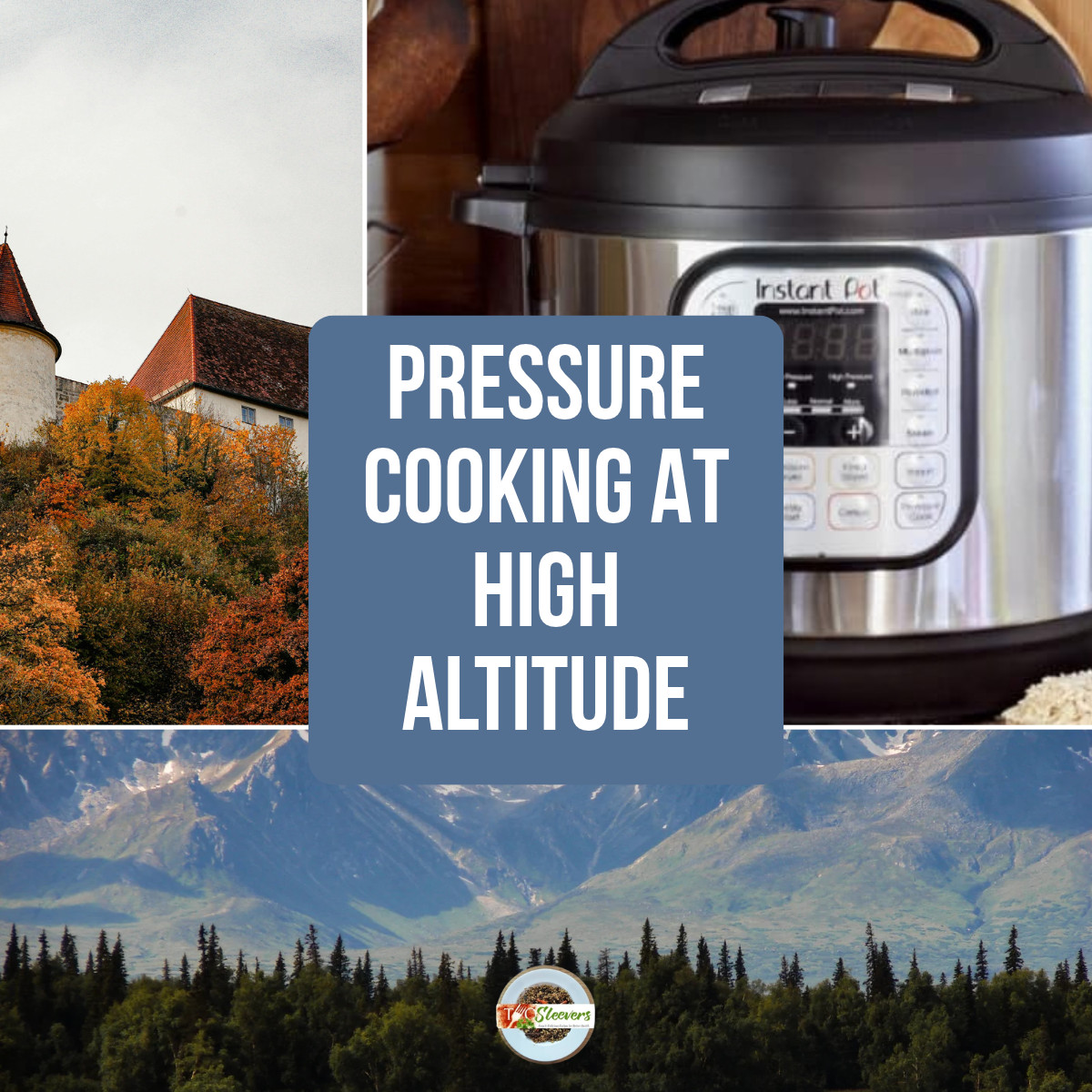
An Instant Pot is especially useful in a high-altitude kitchen, but recipes written for lower elevations may need a little more time under pressure. The usual starting point is to increase the programmed cooking time by 5% for every 1,000 feet above 2,000 feet.
That sounds more complicated than it is. You do not need to change every ingredient, double the liquid, or select a mysterious high-altitude button. You simply need to know your elevation, calculate a modest time increase, and keep notes as you learn how recipes behave in your kitchen.
Why You'll Love This Guide
- Practical. Use a simple formula and altitude chart to adjust cooking times.
- Beginner friendly. Learn what elevation changes and what should stay the same.
- Versatile. Find guidance for beans, grains, meat, eggs, vegetables, and pot-in-pot recipes.
- Helpful. Troubleshoot food that is undercooked even though you followed the recipe.
- Safe. Understand why pressure cooking and pressure canning require different rules.
If you are still getting comfortable with your appliance, start with my collection of Instant Pot Tips And Tricks.
Does Altitude Affect Pressure Cooking?

Yes. Atmospheric pressure becomes lower as elevation increases. Because a pressure cooker operates above the pressure of the surrounding atmosphere, its absolute cooking pressure and cooking temperature are lower at high elevation than they would be at sea level.
Food therefore cooks a little more slowly, even though the pot still reaches pressure and begins its countdown. The solution is generally to add time rather than change the recipe's pressure setting.
High altitude can be particularly noticeable with foods that depend on complete hydration or extensive tenderizing, including:
- Dried beans and chickpeas
- Whole grains
- Brown rice
- Large or collagen-rich cuts of meat
- Dense root vegetables
- Cheesecake, custard, and other pot-in-pot dishes
Short-cooking foods may need little or no practical adjustment because 5% of a few minutes rounds to less than one minute.
At What Altitude Do You Adjust Instant Pot Cooking Time?
Begin considering an adjustment when you cook above 2,000 feet. Add approximately 5% to the recipe's programmed pressure-cooking time for each additional 1,000 feet of elevation.
| Elevation | Suggested increase in pressure time |
|---|---|
| 0 to 2,000 feet | No adjustment |
| 3,000 feet | Add 5% |
| 4,000 feet | Add 10% |
| 5,000 feet | Add 15% |
| 6,000 feet | Add 20% |
| 7,000 feet | Add 25% |
| 8,000 feet | Add 30% |
| 9,000 feet | Add 35% |
| 10,000 feet | Add 40% |
This is a starting point, not a promise that every food will behave identically. Ingredient age, food thickness, pressure cooker model, starting temperature, and preferred texture still matter.
The same general adjustment is included in my Instant Pot Cooking Times Chart, which provides starting times and release methods for common foods.
High Altitude Pressure Cooking Formula
Use this formula:
Original pressure time × altitude multiplier = adjusted pressure time
The multiplier is 1 plus the adjustment percentage written as a decimal.
For example, at 5,000 feet, the adjustment is 15%:
20 minutes × 1.15 = 23 minutes
Set the Instant Pot for 23 minutes at the pressure level specified in the original recipe.
Easy Multiplier Chart
| Elevation | Multiply the original time by |
|---|---|
| 3,000 feet | 1.05 |
| 4,000 feet | 1.10 |
| 5,000 feet | 1.15 |
| 6,000 feet | 1.20 |
| 7,000 feet | 1.25 |
| 8,000 feet | 1.30 |
| 9,000 feet | 1.35 |
| 10,000 feet | 1.40 |
Round the result to a practical whole minute. For delicate foods, round cautiously and check the texture. For tough meat or dried beans, rounding up is often more useful than rounding down.
High Altitude Instant Pot Time Conversion Chart
Use this chart for quick planning. These are adjusted versions of an original recipe time, not universal cooking times for a specific food.
| Original recipe time | 3,000 ft | 4,000 ft | 5,000 ft | 6,000 ft | 7,000 ft | 8,000 ft |
|---|---|---|---|---|---|---|
| 5 minutes | 5 min | 6 min | 6 min | 6 min | 6 min | 7 min |
| 10 minutes | 11 min | 11 min | 12 min | 12 min | 13 min | 13 min |
| 15 minutes | 16 min | 17 min | 17 min | 18 min | 19 min | 20 min |
| 20 minutes | 21 min | 22 min | 23 min | 24 min | 25 min | 26 min |
| 30 minutes | 32 min | 33 min | 35 min | 36 min | 38 min | 39 min |
| 45 minutes | 47 min | 50 min | 52 min | 54 min | 56 min | 59 min |
| 60 minutes | 63 min | 66 min | 69 min | 72 min | 75 min | 78 min |
Rounding explains why some values differ by a minute from a calculator result. Think of the chart as a sensible first attempt, then record what works for your food, appliance, and elevation.
How To Adjust An Instant Pot Recipe For High Altitude

1. Find Your Elevation
Look up the elevation for your exact address or use a reliable local source. Elevation can vary considerably within one city or county, so a regional average may not be accurate enough in mountainous areas.
2. Identify The Programmed Pressure Time
Adjust only the time the food cooks under pressure. Do not multiply the prep time, time needed to reach pressure, or natural-release period by the altitude percentage.
If a recipe says to pressure cook for 20 minutes and then allow a 10-minute natural release, apply the percentage to the 20 minutes. Keep the specified 10-minute release unless testing shows the food needs something different.
3. Calculate The Increase
Add 5% per 1,000 feet above 2,000 feet. At 6,000 feet, for example, add 20%.
4. Round Sensibly
An Instant Pot is programmed in whole minutes, so round the result. A 4-minute recipe at 5,000 feet calculates to 4.6 minutes. Start with 5 minutes rather than trying to make a large adjustment to a delicate food.
5. Keep Everything Else Consistent
Use the same ingredient quantities, food size, pressure level, and release method as the tested recipe. Changing several variables at once makes it difficult to tell whether altitude was the real problem.
6. Check Doneness Safely
After pressure has been released and the float valve has dropped, open the lid and check the food. Meat should reach a safe internal temperature and the intended tenderness. Beans and grains should be fully cooked to your preferred texture.
If the food needs more time, reseal the pot and add a short second pressure cycle.
7. Write Down The Result
Record the recipe, original time, adjusted time, release method, ingredient size, and final texture. Your own notes will become more valuable than a generic chart after a few attempts.
What Should You Change Besides Cooking Time?
Usually, nothing. Start by changing only the programmed pressure time.
Do You Need More Liquid At High Altitude?

Do not automatically increase the liquid. An electric pressure cooker is a sealed environment and loses much less water than an uncovered pot.
Use at least the minimum thin liquid required by your specific model and the amount listed in the tested recipe. If a dish repeatedly produces a burn warning or becomes unusually dry, make a small liquid adjustment during the next attempt rather than adding a large amount without evidence.
Extra liquid will not correct every problem. Too much can dilute flavor, make rice mushy, and leave sauces watery.
Should You Change The Pressure Setting?
Use the pressure level specified in the recipe. If it calls for High Pressure, keep High Pressure and increase the time. Do not substitute Low Pressure merely because you are adjusting for elevation.
Should You Change The Release Method?
Use the release method stated in the recipe. Natural pressure release and quick pressure release influence texture, carryover cooking, and the safe handling of foamy foods.
My Instant Pot Natural Release Versus Quick Release guide explains when each method works best.
Should You Change The Amount Of Food?
Altitude does not require you to reduce the recipe quantity. However, never exceed your appliance's pressure-cooking fill line, and observe the lower limit required for expanding or foamy foods.
If you are changing the serving size too, use my guide for How To Double Or Halve Instant Pot Recipes. Scaling and altitude are separate adjustments. Change the ingredient amounts for scaling, then calculate the altitude adjustment from the recipe's tested pressure time.
Pressure Cooking Beans At High Altitude

Dried beans are one of the foods most noticeably affected by elevation. They need to absorb water and soften completely, and old beans can require considerably more time than fresh beans.
For better results:
- Start with the 5% per 1,000 feet adjustment.
- Use fresh dried beans when possible.
- Sort and rinse the beans before cooking.
- Soak only when the recipe recommends it, since soaked and unsoaked beans use different times.
- Use enough water for hydration and safe pressure cooking.
- Allow the natural-release period specified in the recipe.
- Add a short second cycle if the centers remain firm.
Do not assume every bean variety needs the same time. Chickpeas, kidney beans, black beans, and smaller lentils hydrate differently.
Use How To Cook Beans In The Instant Pot for general bean guidance, or try Instant Pot Rajma and Mexican Frijoles Charro with the appropriate adjustment for your elevation.
Why Are My Beans Still Hard?
Altitude may be one factor, but it is not the only one. Beans can remain hard because they are old, the cooking liquid is highly acidic, there is not enough water, or the pressure time is too short.
If beans are nearly tender, cook them for another 3 to 5 minutes under pressure and allow another natural release. Extremely firm beans may need a longer second cycle.
Cooking Rice And Grains At High Altitude
Rice is less forgiving than beans because a small amount of extra time can change it from firm to mushy. Start with the calculated adjustment, but round conservatively for short recipes.
Keep the rice-to-liquid ratio unchanged on your first attempt. Increasing both time and water can overcorrect the recipe.
Whole grains and brown rice usually need more adjustment than quick-cooking white rice because their original cooking times are longer. Note the rice variety, whether it was rinsed or soaked, and the exact release method so you can repeat successful results.
Instant Pot Pot-In-Pot Beans And Rice demonstrates how foods can cook together in separate containers. At high altitude, apply the adjustment to the shared pressure time, then judge whether both components reach the texture you want.
Pressure Cooking Meat At High Altitude

Large roasts, brisket, short ribs, and stew meat may need additional time to become tender at elevation. Safe internal temperature and tenderness are not the same thing. A chuck roast can be safely cooked but still too firm to shred because its connective tissue has not softened enough.
Use these tips:
- Keep pieces uniform in size.
- Adjust the tested pressure time by the altitude percentage.
- Use the recipe's specified natural release.
- Check doneness with a food thermometer when appropriate.
- Test tenderness with a fork before deciding the meat is finished.
- Add time in small increments if a collagen-rich cut is still tough.
For a practical example of breaking a large cut into evenly sized pieces, see this Instant Pot Pot Roast.
For a practical example, Instant Pot Ropa Vieja uses a timed natural release before the beef is shredded. Preserve the release method when adjusting its programmed cooking time.
Pressure Cooking Vegetables At High Altitude

Vegetables often have very short cooking times, so a percentage-based adjustment may equal less than one minute. That creates a challenge because one extra minute can be significant for broccoli, green beans, or other delicate vegetables.
Try the original time first when:
- The pressure time is zero to 2 minutes.
- You prefer crisp-tender vegetables.
- The recipe uses a quick release to stop carryover cooking.
Add one minute only if the first batch is consistently undercooked. For dense vegetables such as whole potatoes, beets, or winter squash, the normal altitude calculation is more useful.
Do not extend the natural release for delicate vegetables unless the recipe directs you to do so. Carryover heat can turn them mushy even if the programmed pressure time is correct.
Cooking Eggs At High Altitude

Eggs can require experimentation because size, refrigerator temperature, desired yolk texture, and rapid cooling all affect the result.
Start with the calculated high-altitude time, then keep the water amount, release method, and ice bath consistent. Change only one variable during the next batch.
If a short recipe produces a fractional adjustment, add one minute only if eggs are repeatedly underdone. Transfer cooked eggs promptly to an ice bath when the recipe calls for one to limit carryover cooking.
Pot-In-Pot Cooking At High Altitude
Pot-in-pot cooking uses a separate heat-safe container on a trivet above liquid in the inner pot. It is useful for rice, grains, custards, cheesecakes, and meals with more than one component.
Apply the altitude adjustment to the programmed pressure time. Do not increase the water inside a rice or custard container automatically. Keep the recipe's inner-pot liquid, covered or uncovered container instructions, and release method the same.
Because food inside the elevated container receives heat indirectly, it may be one of the first components to reveal an inadequate cooking time. If the center of a custard or cheesecake is too loose, or grains remain firm, increase the time modestly on the next attempt.
This Pressure Cooker Indian Custard is an example of a covered pot-in-pot dessert with a timed natural release.
Does High Altitude Change The Time Needed To Reach Pressure?
The display's programmed cooking time begins only after the cooker detects that it has reached operating pressure. The warm-up time can still vary with the volume and temperature of the ingredients, pot size, recipe thickness, and appliance model.
Do not include preheating time in the 5% calculation. Adjust the programmed time only.
A large quantity of cold soup or frozen food may take much longer to pressurize than a small amount of warm liquid. That is normal and is not necessarily caused by elevation.
Why Is My Instant Pot Food Undercooked At High Altitude?
Work through these possibilities:
- The recipe time was not adjusted. Calculate 5% per 1,000 feet above 2,000 feet.
- The adjustment was rounded down too aggressively. Add a minute for the next attempt.
- The beans were old. Older dried beans can take much longer to soften.
- The meat was thicker than the recipe specified. Thickness affects cooking time more than total weight.
- The pot did not seal correctly. Check the sealing ring, float valve, steam-release position, and lid.
- There was not enough thin liquid. Follow the recipe and your model's minimum requirement.
- The wrong release method was used. A natural release often contributes useful carryover cooking.
- The recipe itself was not tested for an electric pressure cooker. Begin with a reliable Instant Pot recipe.
If the pot will not seal, produces a burn notice, or shows an error code, use my Instant Pot Troubleshooting Guide.
What If The Food Is Overcooked?
Reduce the adjustment during the next attempt. The 5% rule is a starting point, and delicate foods may need less.
Also check whether you accidentally increased both the pressure time and the release time. A 10-minute natural release should remain 10 minutes unless the recipe or your testing indicates otherwise.
For rice and vegetables, reduce the programmed time by one minute or shorten the natural release. Change only one variable at a time so you know what fixed the texture.
High Altitude Pressure Cooking Tips

- Know your actual elevation. Mountain communities can vary significantly within a short distance.
- Adjust the programmed time only. Do not multiply prep, pressurizing, or release time.
- Start with 5% per 1,000 feet above 2,000 feet. Then fine-tune based on results.
- Round thoughtfully. One minute matters much more in a 3-minute recipe than in a 60-minute recipe.
- Keep the release method. NPR and QPR are part of the tested cooking process.
- Use enough thin liquid. Follow the recipe and appliance manual rather than adding water at random.
- Cut food evenly. Similar sizes cook more consistently at any elevation.
- Check the sealing system. Continuous steam leaks can mimic an inadequate altitude adjustment.
- Use a thermometer. Altitude charts do not replace checking the safe doneness of meat and poultry.
- Keep a kitchen log. Record successful times for frequently cooked foods.
Pressure Cooking Is Not Pressure Canning
This article is about preparing meals in an electric pressure cooker. Pressure canning is a separate food-preservation process with different equipment, tested recipes, processing times, and altitude adjustments.
Do not use this 5% cooking-time formula for home canning. Do not assume an Instant Pot or other electric multicooker can safely replace a pressure canner.
For canning, use a tested recipe from a trusted canning authority, use approved equipment, and follow the elevation-specific pressure instructions exactly. Food-preservation safety is not an area for improvisation.
Frequently Asked Questions
How Much Time Do You Add For High Altitude Pressure Cooking?
Add approximately 5% to the programmed pressure time for every 1,000 feet above 2,000 feet. At 5,000 feet, add about 15%. At 8,000 feet, add about 30%.
Does The Instant Pot Automatically Adjust For Altitude?
Do not assume it does. Most recipes require you to enter an adjusted pressure-cooking time manually. Consult the manual for your exact model because controls and features can change.
What Is Considered High Altitude For An Instant Pot?
For pressure-cooking adjustments, begin at elevations above 2,000 feet. The effect becomes more noticeable as elevation increases and as the original cooking time becomes longer.
Do I Add More Water To My Instant Pot At High Altitude?
Not automatically. Use the recipe's liquid amount and meet the minimum requirement for your appliance. Increase liquid only when repeated testing shows that the particular recipe needs it.
Do I Increase Natural Release Time At High Altitude?
Not as part of the standard percentage calculation. Keep the tested release time on your first attempt. Adjust it separately only when the food's texture or the recipe's safety considerations require a change.
Do I Use High Pressure Or Low Pressure At High Altitude?
Use the pressure level specified by the recipe. Altitude is usually handled by adding cooking time, not by changing High Pressure to Low Pressure or the reverse.
Why Are My Beans Still Hard After Pressure Cooking?
The pressure time may be too short for your elevation, or the beans may be old. Acidity and insufficient water can also slow softening. Add a short second pressure cycle with adequate liquid.
How Do I Adjust A 30-Minute Recipe At 5,000 Feet?
Add 15%. Multiply 30 by 1.15 for a result of 34.5 minutes, then round to 35 minutes.
How Do I Adjust A 20-Minute Recipe At 7,000 Feet?
Add 25%. Multiply 20 by 1.25 for an adjusted pressure time of 25 minutes.
Can I Use This Formula For Stovetop Pressure Cookers?
The need for an altitude adjustment still applies, but stovetop cookers vary in operating pressure and control. Follow the manufacturer's manual and the tested recipe for your specific cooker.
Can I Use This Formula For Pressure Canning?
No. Pressure canning uses specialized equipment and safety-tested processing instructions. Follow an authoritative canning guide for your food, jar size, canner type, and exact elevation.
More Instant Pot Guides And Recipes
Once you know how to adjust for elevation, these resources can help you get more consistent results:
- Instant Pot Cooking Times Chart
- Instant Pot Troubleshooting Guide
- Instant Pot Natural Release Versus Quick Release
- How To Double Or Halve Instant Pot Recipes
- How To Cook Beans In The Instant Pot
- Instant Pot Pot Roast
- Pressure Cooker Beef Stew
- Instant Pot Chicken Taco Soup
- Instant Pot Sambar
- All Instant Pot Beef Recipes
For successful pressure cooking at high altitude, begin with one simple change: increase the programmed pressure time by about 5% for every 1,000 feet above 2,000 feet. Keep the ingredients, pressure level, and release method consistent, then refine the time based on the food and the results in your own kitchen.
If you found this guide helpful, share it on Facebook or Pinterest so other high-altitude cooks can get better results from their Instant Pots too.