

Is your Instant Pot not sealing, leaking steam, displaying a burn message, or taking too long to come to pressure? This Instant Pot troubleshooting guide explains the most common pressure cooker problems, what causes them, and how to fix them safely.
An Instant Pot can make dinner faster and easier, but it can be frustrating when the appliance does not behave the way you expect. Maybe the float valve will not rise, steam is escaping from the lid, or your food is still undercooked when the timer finishes.
Most Instant Pot problems have a simple explanation. Before assuming your pressure cooker is broken, check the sealing ring, pressure release valve, liquid level, inner pot, lid, and recipe instructions.
Why You'll Love This Instant Pot Troubleshooting Guide
- Practical. Quickly identify the most common Instant Pot problems.
- Beginner-Friendly. Understand what the appliance is doing at every stage.
- Comprehensive. Troubleshoot sealing, pressure, steam, food texture, error messages, and more.
- Safe. Learn when to stop cooking and consult your manufacturer.
- Helpful. Find solutions that can prevent the same problem during your next recipe.
Once your pressure cooker is working correctly, explore my collection of more than 300 easy Instant Pot recipes.
Quick Instant Pot Troubleshooting Chart
| Problem | Likely Cause | What To Check |
|---|---|---|
| Instant Pot will not turn on | Loose connection or electrical problem | Cord, outlet, and detachable power cord |
| Lid will not close | Sealing ring, float valve, or lid is misaligned | Reinstall the ring and check the lid |
| Instant Pot will not seal | Valve is venting or ring is misplaced | Valve position, sealing ring, and lid |
| Steam leaks from the lid | Damaged, dirty, or loose sealing ring | Clean and reinstall or replace the ring |
| Float valve will not rise | Not enough steam or pressure is escaping | Liquid, valve, ring, and lid |
| Pot takes too long to pressurize | Large volume, frozen food, or escaping steam | Recipe volume and sealing components |
| Burn message appears | Food is stuck or liquid is too thick | Deglaze and add thin liquid |
| Food is undercooked | Incorrect time, pressure, or food size | Pressure setting and recipe instructions |
| Food is overcooked | Wrong release method or excess cook time | Use the specified pressure release |
| Food is watery | Ingredients released additional liquid | Reduce liquid or use Sauté after cooking |
| Lid is stuck | Pot is still pressurized | Wait for the float valve to drop |
| Display shows an error code | Model-specific fault or overheating | Check the manual for that exact code |
Before Troubleshooting Your Instant Pot
Always begin with these safety steps:
- Read the manual for your specific Instant Pot model.
- Keep your face and hands away from the steam release valve.
- Never force the lid open.
- Do not move the pressure cooker while it is pressurized.
- Unplug the appliance before inspecting electrical parts.
- Allow the cooker to cool before removing or cleaning small lid components.
- Stop using the appliance if the cord, plug, lid, or pressure-control components appear damaged.
Instant Pot models vary, so buttons, valves, error codes, and lid designs may look different from one appliance to another.
Why Won't My Instant Pot Turn On?
If the Instant Pot display is blank, begin with the simplest possible causes.
- Make sure the power cord is firmly connected to the cooker.
- Confirm that the plug is completely inserted into the outlet.
- Check whether the outlet works with another small appliance.
- Inspect the cord for visible damage.
- If your model has a detachable cord, make sure the connection at the cooker is secure.
- Press Cancel, then select the desired cooking program again.
If the appliance still has no power, unplug it and contact the manufacturer. Do not attempt to open or repair the electrical base yourself.
Why Won't My Instant Pot Lid Close?
An Instant Pot lid may refuse to close if a component is out of position.
Check The Sealing Ring
Make sure the silicone sealing ring is fully seated behind the metal ring inside the lid. Work your fingers around the entire ring and press it securely into place.
A ring that is twisted, stretched, missing, or installed unevenly can prevent the lid from closing or sealing.
Check The Float Valve
The float valve should move freely when the cooker is cool and depressurized. Food residue can cause it to stick in a raised or partially raised position.
Allow the lid to cool, remove it, and clean the float valve according to the instructions for your model.
Check The Lid Position
Place the lid on the cooker using the alignment markings, then rotate it into the locked position. Do not force it.
Check The Inner Pot
Make sure the stainless steel inner pot is installed correctly. The lid may not align properly if the liner is missing, tilted, or obstructed.
Why Is My Instant Pot Not Sealing?
An Instant Pot that does not seal cannot build pressure. You may hear continuous hissing or see steam escaping for several minutes without the float valve rising.
Check these common causes:
- The pressure release valve is set to Venting instead of Sealing.
- The sealing ring is missing.
- The sealing ring is not installed evenly.
- The ring is stretched, cracked, or damaged.
- The lid is not locked.
- Food or debris is preventing a proper seal.
- The float valve is dirty or obstructed.
- There is not enough thin liquid in the pot.
- The cooker is overfilled.
- The inner pot or rim is dirty.
Some newer Instant Pot models seal automatically, while older models require you to move the valve manually. Check the manual if you are unsure how your model works.
Is It Normal For Steam To Come Out Of The Instant Pot?
A small amount of steam may escape from the float valve as the Instant Pot begins heating. Once enough steam has formed, the float valve should rise and the escaping steam should stop.
Continuous steam from the pressure release valve usually means the valve is set to Venting, is not seated correctly, or needs cleaning.
Steam escaping from around the edge of the lid usually points to a problem with the sealing ring. Cancel the cooking program and wait for the pot to depressurize before inspecting it.
Do not place your hands near escaping steam.
Why Is Steam Leaking From The Side Of The Lid?
Steam should not continuously leak from the edge of the lid.
The most common causes are:
- The sealing ring is not seated correctly.
- The ring has food or grease on it.
- The ring is stretched or damaged.
- The lid or rim of the inner pot is dirty.
- The lid is not fully locked.
- The cooker is overfilled.
- A component is missing or installed incorrectly.
After the pressure has released completely, remove the ring, wash it, dry it, and reinstall it evenly. Clean the lid and the rim of the inner pot before trying again.
Replace a sealing ring that is cracked, torn, hardened, or excessively stretched.
Why Is My Instant Pot Not Coming To Pressure?
If the Instant Pot is heating but the float valve never rises, the cooker is probably losing steam or failing to generate enough of it.
Not Enough Thin Liquid
Pressure cookers need liquid to create steam. Follow a tested recipe and use the minimum liquid recommended for your model.
Water, broth, and other thin liquids create steam effectively. Tomato paste, cream soups, thick sauces, and dairy products do not behave the same way.
Pressure Valve Is Open
Make sure the steam release valve is in the correct sealing position unless your model seals automatically.
Sealing Ring Problem
Check that the ring is present, clean, undamaged, and seated evenly.
Food Is Stuck To The Bottom
Food stuck to the liner can interfere with heating and trigger a burn warning before pressure develops. Deglaze the pot after sautéing.
Pot Is Overfilled
Do not fill above the maximum line. Foods that expand or foam, such as rice, beans, pasta, and grains, generally require additional empty space.
Frozen Ingredients Are Slowing It Down
A large amount of frozen food can significantly increase the time needed to reach pressure. The programmed cook time will not begin until the cooker is pressurized.
Why Is My Instant Pot Taking So Long?
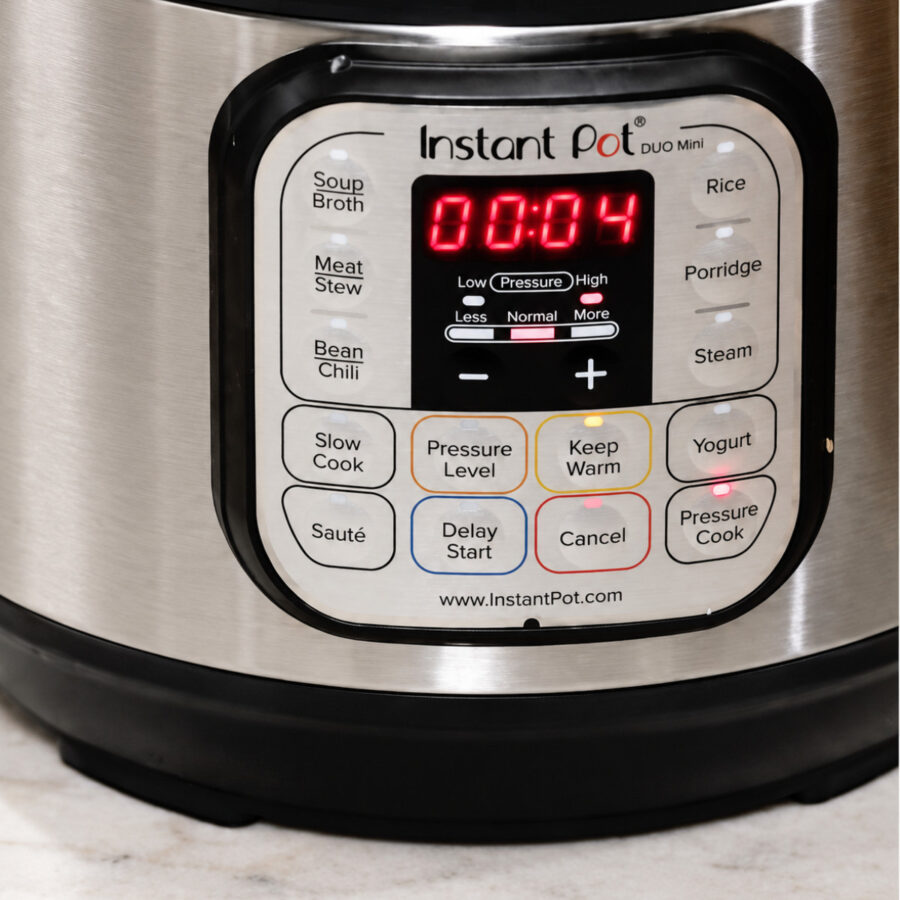
The cook time shown in a recipe usually describes only the time under pressure. It does not always include:
- Time needed to heat the contents
- Time needed to build pressure
- Natural pressure release time
- Sautéing or preparation
- Time needed to reduce a sauce
A small recipe may reach pressure quickly, while a large pot of soup or frozen meat can take considerably longer.
The Instant Pot is working during the preheating stage even if the countdown has not started. Once pressure is reached, the float valve rises and the programmed cooking time begins counting down.
What Does The Instant Pot Burn Message Mean?
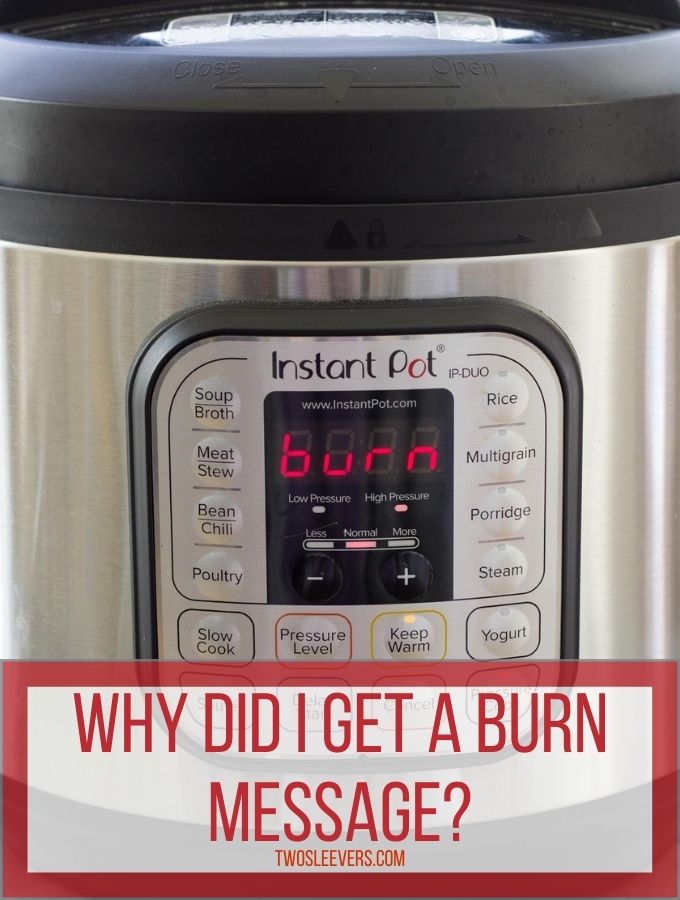
The burn, food burn, or overheating warning means the cooker has detected excessive heat at the bottom of the inner pot.
Common causes include:
- Food stuck to the bottom after sautéing
- Not enough thin liquid
- Thick sauce touching the bottom
- Tomato paste or tomato sauce stirred into the liquid
- Dairy products added before pressure cooking
- Pasta or starch settled against the liner
- A sealing problem that allowed liquid to evaporate
- A damaged or dirty inner pot
- A recipe that was not designed for your cooker size
Read my complete guide to the Instant Pot burn message for a more detailed explanation.
How Do You Fix An Instant Pot Burn Message?
- Press Cancel.
- Do not force the lid open.
- Release pressure only when it is safe and appropriate for the recipe.
- Remove the lid after the float valve drops.
- Transfer unburned food to a clean bowl without scraping up burnt residue.
- Wash or replace the inner pot.
- Add the amount of thin liquid required by the recipe.
- Return the unburned food to the clean liner.
- Keep thick sauces above thinner ingredients when the recipe calls for layering.
- Restart the cooking program.
If you sautéed ingredients before pressure cooking, pour in some of the recipe's liquid and scrape the bottom thoroughly. No browned food should remain stuck to the liner.
Why Is The Instant Pot Float Valve Not Rising?
The float valve rises when enough pressure forms inside the cooker.
It may stay down when:
- The pressure valve is open.
- The sealing ring is missing or loose.
- The recipe does not contain enough liquid.
- Steam is leaking from the lid.
- Food debris is obstructing the valve.
- The lid is not locked.
- The cooker has not heated long enough.
Some steam near the float valve can be normal during preheating. If steam continues escaping and the valve does not rise, cancel the program and allow the cooker to cool before inspecting it.
Never place your fingers over the valve or attempt to force it upward.
Why Is The Float Valve Stuck In The Up Position?
If the float valve remains raised after cooking, pressure may still be inside the pot.
Wait for the cooker to depressurize naturally. Do not force the lid or push the valve down with your fingers.
A full pot, thick soup, beans, grains, or a large cut of meat can take longer to release pressure. If the recipe permits a quick release, follow the manufacturer's instructions while keeping your hands and face away from the steam.
Once the pot is completely cool and depressurized, clean the float valve if it does not move freely.
Why Is My Instant Pot Lid Stuck?
The lid locks when the cooker is pressurized. This is a safety feature.
If the lid will not open:
- Confirm the cooking program has ended.
- Check whether the float valve is still raised.
- Wait for the pressure to release.
- Use the release method specified by the recipe.
- Never twist, pull, pry, or force the lid.
If the float valve has dropped and the lid still will not open, unplug the appliance and allow it to cool completely. Consult the manufacturer's instructions for your model.
Natural Release Vs Quick Release
The pressure release method affects food texture and total cooking time.
Natural Pressure Release
With a natural release, you leave the cooker undisturbed after the cooking program finishes. Pressure gradually falls as the contents cool.
Natural release is commonly used for:
- Large cuts of meat
- Beans
- Foamy foods
- Soups with a large volume of liquid
- Recipes that need additional resting time
Quick Pressure Release
With a quick release, you carefully open the pressure release valve according to the manufacturer's directions.
Quick release is commonly used for:
- Delicate vegetables
- Seafood
- Foods that overcook quickly
- Recipes cooked in multiple stages
A shortened natural release combines both methods. Let the cooker sit for a specified time, often 10 minutes, then release the remaining pressure.
Read my complete comparison of Instant Pot natural pressure release and quick pressure release to understand which method works best.
Why Is My Instant Pot Food Undercooked?
If your food is not fully cooked, check these possible causes:
- Pieces were larger than the recipe specified.
- The food was frozen.
- Low pressure was selected instead of high pressure.
- The wrong cooking program was used.
- The cooker never fully reached pressure.
- The recipe time was changed.
- The cooking liquid was too thick.
- The lid or sealing ring leaked.
- The food needed a natural release but received a quick release.
- The pot was opened before the resting time finished.
If the appliance sealed correctly, return the food to pressure for a short additional cooking cycle. Make sure there is enough thin liquid before restarting.
For a reliable recipe to practice with, try my popular Instant Pot Butter Chicken.
Why Is My Instant Pot Food Overcooked?
Food may overcook when:
- The pressure cooking time was too long.
- Pieces were smaller than the recipe required.
- The wrong pressure level was selected.
- A natural release was used instead of a quick release.
- The food remained on Keep Warm for too long.
- Carryover cooking was not considered.
- A recipe designed for another cooking method was used without proper conversion.
Remember that food continues cooking while the cooker releases pressure naturally. A 10-minute natural release is part of the total cooking process.
Delicate vegetables, seafood, and pasta are especially sensitive to small timing changes.
Why Is My Instant Pot Meat Tough?

Tough meat can be either undercooked or overcooked.
Collagen-rich cuts such as chuck roast, pork shoulder, and brisket often become tender after sufficient pressure cooking and resting. If the meat is still firm and difficult to shred, it may need more time.
Lean meat can become dry or tough when cooked too long. Chicken breasts, pork loin, and seafood generally require less cooking than fattier cuts.
Also check the pressure release instructions. A recipe that calls for a natural release may rely on that resting period to finish cooking the meat.
Why Is My Instant Pot Food Watery?
Meat and vegetables release liquid as they cook. Because the Instant Pot loses very little moisture during pressure cooking, a recipe can finish with more liquid than you expect.
To fix a thin sauce:
- Remove delicate or fully cooked ingredients.
- Select Sauté.
- Simmer the liquid until it reduces.
- Stir frequently to prevent scorching.
- Add dairy or thickeners at the end when the recipe directs you to do so.
Do not try to prevent watery food by eliminating required pressure-cooking liquid. The appliance still needs enough thin liquid to generate steam safely.
Why Is My Instant Pot Rice Mushy?
Mushy Instant Pot rice can result from:
- Too much water
- Excessive cooking time
- An unnecessarily long natural release
- Using a different variety of rice
- Failing to drain rinsed rice
- Doubling liquid incorrectly
- Leaving cooked rice on Keep Warm for too long
Use the exact variety and ratio specified in the recipe. Brown rice, jasmine rice, basmati rice, and short-grain rice do not necessarily use identical cooking times or water ratios.
You can also use the pot-in-pot method demonstrated in recipes such as Instant Pot Butter Chicken to cook rice separately from the main dish.
Why Is My Instant Pot Rice Crunchy?
Crunchy rice usually needs more water or additional cooking time.
Other possible causes include:
- Steam escaped before pressure developed.
- Rice was not evenly covered by liquid.
- The sealing ring leaked.
- The wrong pressure level was selected.
- The pot was opened too early.
- Ingredients on the bottom triggered a burn warning.
- The rice was layered incorrectly.
Add a small amount of water and cook the rice briefly again if it is only slightly underdone. Use a tested recipe rather than guessing at the liquid ratio.
Why Is Liquid Spraying From The Steam Release Valve?
Stop the release if liquid or foam sprays from the valve.
This may happen when:
- The pot is too full.
- The recipe contains foamy or starchy ingredients.
- The liquid is thick.
- A quick release is being used when a natural release is more appropriate.
- Pasta, grains, beans, or soup are bubbling vigorously.
Move away from the steam and allow the pot to rest before attempting another release. Use the pressure release method specified in the tested recipe.
Never cover the valve with a towel, hand, or other object.
Why Does My Instant Pot Sealing Ring Smell?
Silicone can absorb odors from strongly seasoned dishes. The smell does not necessarily mean the ring is dirty, but it should be cleaned after use.
Try these tips:
- Wash the ring with warm, soapy water.
- Check whether your model permits dishwasher cleaning.
- Allow the ring to dry completely.
- Store the lid upside down or loosely positioned to improve airflow.
- Use separate rings for savory and sweet recipes.
- Replace a ring that is damaged, hardened, or excessively stretched.
Always reinstall the sealing ring before pressure cooking.
Why Are My Instant Pot Buttons Not Working?
Begin by pressing Cancel and confirming the lid and inner pot are positioned correctly.
The control panel may not respond as expected when:
- A cooking program is already active.
- The cooker is still pressurized.
- Delay Start is enabled.
- The buttons require a different selection order.
- The control panel is locked on a model with a locking feature.
- The appliance has overheated.
- Moisture or food has reached the controls.
- The cooker has an electrical fault.
Instant Pot control panels vary by model. My guide to the six most important Instant Pot buttons explains the functions you are most likely to use.
What Do Instant Pot Error Codes Mean?

Error codes vary by model. They may indicate overheating, a lid problem, an electrical fault, or a malfunctioning sensor.
When an error code appears:
- Write down the exact code.
- Press Cancel.
- Unplug the appliance if the manual instructs you to do so.
- Allow the cooker to cool.
- Check the model-specific manual.
- Contact the manufacturer if the code returns.
Do not rely on an error-code definition written for a different Instant Pot model.
How Do You Reset An Instant Pot?
For a minor control issue, press Cancel and unplug the cooker after pressure has been released safely. Wait briefly, reconnect the power, and select the program again.
Some models have specific reset or factory-reset procedures. Consult the manual before using a sequence of buttons found online because the controls differ between models.
A reset will not repair a damaged sealing ring, obstructed valve, overheating problem, or electrical fault.
How Do You Prevent Instant Pot Problems?
- Read the entire recipe before starting.
- Use recipes tested for electric pressure cookers.
- Install the stainless steel inner pot before adding ingredients.
- Confirm the sealing ring is present and secure.
- Keep the float valve and pressure release components clean.
- Use enough thin liquid.
- Deglaze after sautéing.
- Layer thick sauces instead of stirring them into the bottom.
- Do not exceed the maximum fill line.
- Use the pressure level specified in the recipe.
- Follow the correct pressure release method.
- Replace damaged silicone and valve components.
- Clean and dry the lid after each use.
- Check the manual when an error code appears.
If the many buttons and settings feel overwhelming, start with a straightforward recipe and learn one pressure-cooking function at a time. Browse my Instant Pot recipe collection for tested ideas.
Frequently Asked Questions

Why Does My Instant Pot Say On?
The word "On" generally means the cooker is heating and attempting to reach pressure. The cooking countdown begins after the pot has pressurized.
How Long Should An Instant Pot Take To Pressurize?
The time varies according to the model, recipe volume, ingredient temperature, and whether food is frozen. A large pot of cold soup can take much longer than a small quantity of warm liquid.
Can You Open An Instant Pot Before The Float Valve Drops?
No. Never force open a pressure cooker. Wait until pressure has been released and the float valve has dropped.
Should Steam Come Out While The Instant Pot Is Pressurizing?
A small amount of steam can escape near the float valve during preheating. Continuous steam from the valve or around the lid indicates that the cooker may not be sealing correctly.
Can You Use An Instant Pot Without The Sealing Ring?
Not for pressure cooking. The sealing ring is required to create a closed environment that can build pressure.
Why Does My Instant Pot Keep Saying Burn?
Repeated burn warnings usually indicate stuck food, insufficient thin liquid, thick sauce on the bottom, improper layering, or a sealing problem. Cancel the cycle and correct the cause before restarting.
Does The Instant Pot Timer Include Preheating?
No. The programmed pressure-cooking countdown generally begins after the cooker reaches pressure. Total recipe time also includes preheating and pressure release.
Can You Double An Instant Pot Recipe?
Many recipes can be doubled without doubling the pressure-cooking time, but you must stay below the appropriate fill line and maintain the tested liquid ratio. A fuller pot will take longer to pressurize and depressurize. Get more tips and tricks in my guide for how to double or halve Instant Pot recipes.
Is The Instant Pot Supposed To Hiss?
Brief hissing while the cooker approaches pressure can be normal. Continuous hissing usually means steam is escaping through the release valve, sealing ring, float valve, or lid.
When Should You Stop Using An Instant Pot?
Stop using it if the cord is damaged, the lid or inner pot is warped, a pressure-control component is broken, an electrical smell develops, or the appliance repeatedly displays an error that the manual says requires service.
More Helpful Instant Pot Guides And Recipes
- Why Did My Food Burn In The Instant Pot?
- Natural Pressure Release Vs Quick Release
- The Six Most Important Instant Pot Buttons
- Instant Pot Vs Air Fryer
- Kitchen Gadget Reviews
- Best Instant Pot Soup Recipes
- Instant Pot Chicken And Rice
- Instant Pot Butter Chicken
Most pressure cooker problems come down to one of five things: the lid, sealing ring, valve, liquid level, or recipe method. Work through those areas carefully, avoid forcing any pressurized component, and consult the model-specific manual when an error or safety concern remains.
If this Instant Pot troubleshooting guide helped solve your problem, share it with your friends on Facebook and Pinterest so they can get back to pressure cooking too.




Leave a Reply