

Wondering how to double an Instant Pot recipe or cut one in half without changing the texture, triggering a burn warning, or overfilling your pressure cooker? The most important rule is surprisingly simple: adjust the ingredients, but do not automatically adjust the pressure cooking time.
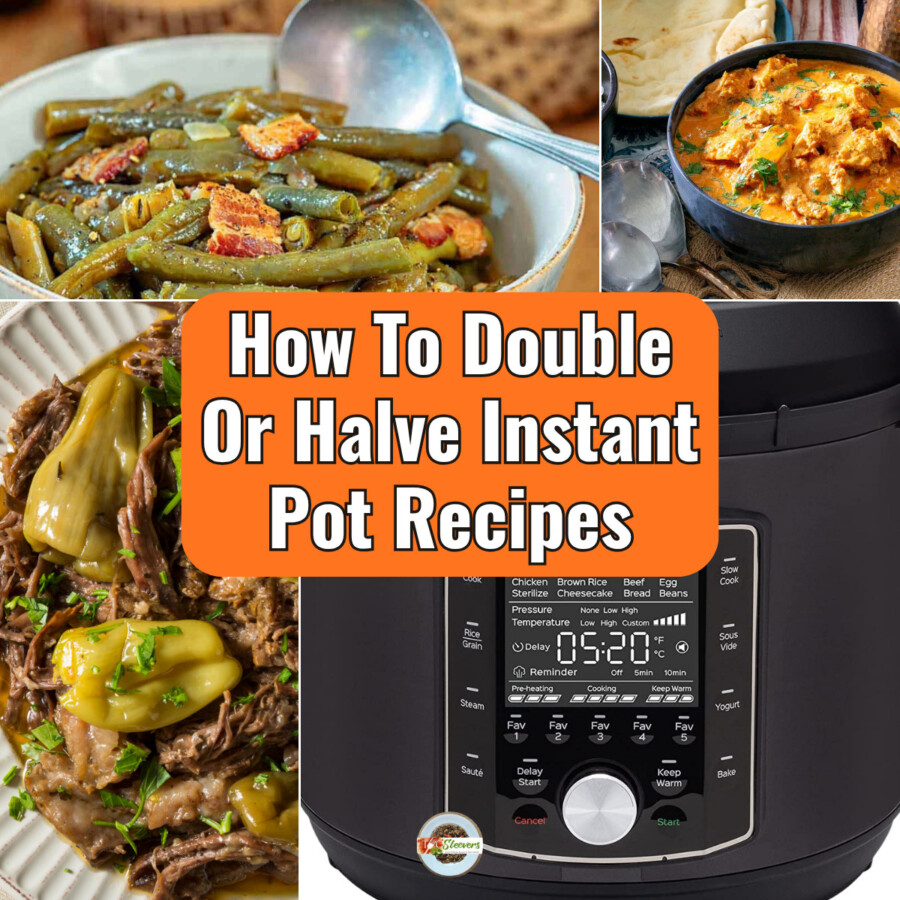
Scaling pressure cooker recipes is different from scaling recipes made in the oven or on the stovetop. The size of the food, amount of thin liquid, release method, and capacity of your Instant Pot matter more than the number of servings.
Why You'll Love This Instant Pot Guide
- Practical. Learn exactly what to change when doubling or halving a recipe.
- Beginner-Friendly. Understand why pressure cooking time usually stays the same.
- Safe. Avoid exceeding your Instant Pot's pressure-cooking fill line.
- Helpful. Prevent burn warnings, watery sauces, mushy rice, and overcooked pasta.
- Flexible. Make the right amount of food for a smaller household, meal prep, or entertaining.
- Comprehensive. Find specific guidance for meat, soup, rice, pasta, beans, spices, sauces, and pot-in-pot recipes.
Once you understand the basic rules, you can scale many of your favorite Instant Pot recipes with confidence.
Can You Double An Instant Pot Recipe?
Yes, many Instant Pot recipes can be doubled as long as the increased quantity fits safely below the pressure-cooking fill line.
When doubling a pressure cooker recipe:
- Double most of the ingredients.
- Keep food pieces approximately the same size.
- Do not automatically double the pressure cooking time.
- Make sure there is enough thin liquid for your specific Instant Pot model.
- Do not exceed the appropriate fill line.
- Use the same pressure level and release method unless the recipe provides different instructions.
- Expect the cooker to take longer to reach pressure and release pressure.
A recipe that calls for 10 minutes on High Pressure will generally still cook for 10 minutes on High Pressure when doubled. The larger batch may take considerably longer to heat and build pressure, but the programmed pressure cooking time usually remains unchanged.
Can You Halve An Instant Pot Recipe?
Yes, many Instant Pot recipes can also be cut in half.
When halving a pressure cooker recipe:
- Halve the main ingredients.
- Keep the original pressure cooking time.
- Keep the food pieces the same size.
- Do not reduce the liquid below the minimum required by your pressure cooker.
- Use the same pressure release method.
- Reduce spices, salt, and other seasonings carefully.
- Check that the smaller amount still covers or surrounds ingredients as the recipe requires.
The thin liquid is the most important exception. If halving the recipe would leave too little water or broth for your Instant Pot to generate steam, use the minimum required for your model instead of cutting the liquid exactly in half.
Quick Guide To Scaling Instant Pot Recipes
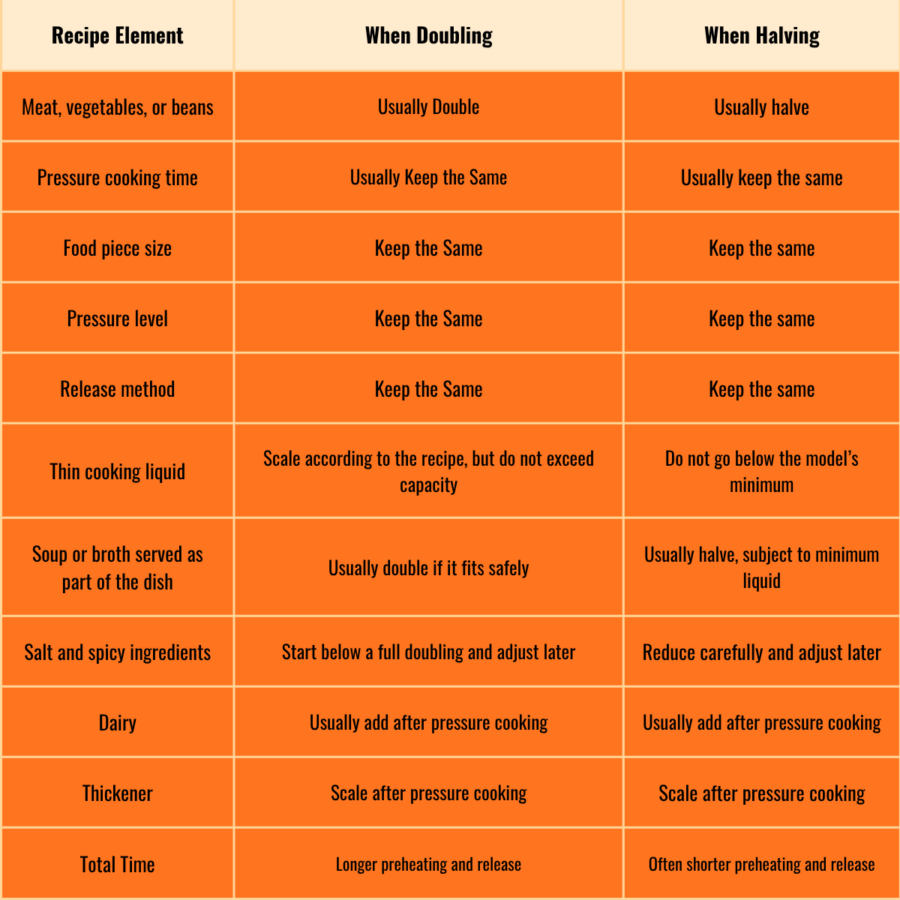
Why Doesn't The Instant Pot Cooking Time Double?
Pressure cooking time is primarily determined by the size, density, and type of food rather than the total number of pieces in the pot.
For example, one pound of chicken cut into 1-inch pieces and two pounds of chicken cut into 1-inch pieces generally need the same programmed pressure cooking time. Each individual piece is still the same size.
The extra food will make the Instant Pot take longer to heat and build pressure. Once the cooker reaches pressure, however, the pieces cook under the same conditions.
You may need more pressure cooking time if you increase the size or thickness of the individual pieces. Two small chicken breasts may cook at a different rate than one very large, thick chicken breast even if the total weight is similar.
What Changes When You Double An Instant Pot Recipe?
Although the programmed cook time usually remains the same, the total recipe time will increase.
A larger quantity of food generally requires more time to:
- Heat the ingredients
- Produce enough steam
- Bring the pot to pressure
- Naturally release pressure
- Reduce a thin sauce after cooking
- Cool before storage
The Instant Pot countdown does not begin until the cooker reaches pressure. A doubled recipe might still display a 10-minute cooking time, but it may spend significantly longer in the preheating stage.
This does not necessarily mean anything is wrong. If the cooker never seals or the countdown never begins, use this Instant Pot troubleshooting guide to check the liquid, sealing ring, valve, lid, and fill level.
How Full Can An Instant Pot Be?
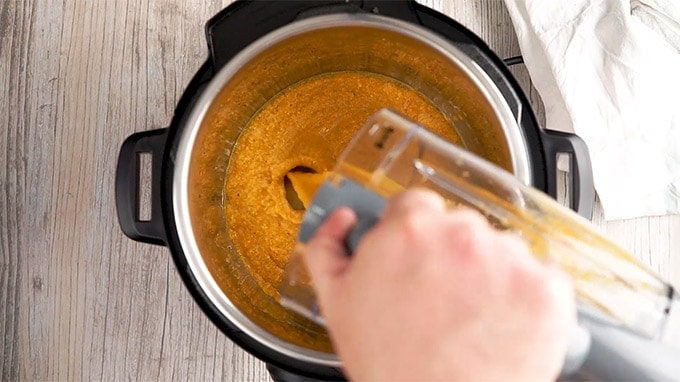
Never fill your pressure cooker above the pressure-cooking maximum indicated on the inner pot or in the manual for your specific model.
Foods that expand, foam, or create froth need additional empty space. These can include:
- Rice
- Pasta
- Beans
- Lentils
- Barley
- Oats
- Other grains
- Applesauce
- Thick soups
Do not assume that a recipe will fit simply because the listed ingredient quantities appear to fit inside the inner pot. Ingredients may expand, foam, or release additional liquid while cooking.
If a doubled recipe exceeds the permitted fill level, cook it in two batches or use a larger pressure cooker that is suitable for the recipe.
Never press ingredients down or ignore the fill line to force a doubled recipe into the pot.
How Much Liquid Do You Need?
An Instant Pot needs thin liquid to create steam and build pressure. Water and broth are common examples.
Tomato paste, cream soup, thick salsa, cheese sauce, and heavy cream do not function like the same volume of water or broth.
The exact minimum liquid depends on the Instant Pot model and size, so consult your manual instead of relying on one universal amount.
When To Double The Liquid
Double the liquid when it is an essential part of the finished dish and the full amount fits safely in the pressure cooker.
Examples include:
- Broth in a soup
- Cooking liquid in a stew
- Water needed for dried beans
- Liquid used in a rice or grain ratio
- Sauce intended to provide a specific number of servings
When Not To Double The Liquid Automatically
Do not automatically double liquid that is included primarily to help the cooker reach pressure.
Meat, poultry, and vegetables often release moisture as they cook. Doubling every drop of water or broth may leave the finished dish thin and watery.
Follow the notes in the tested recipe whenever possible. If the recipe does not explain the purpose of the liquid, consider whether it is part of the final sauce or simply the minimum needed to create steam.
When Halving The Liquid
Halve a soup broth or other serving liquid only if the remaining amount still meets your pressure cooker's minimum requirement.
If the original recipe uses the minimum amount of thin liquid, do not reduce it further. Keep the full amount and reduce the sauce afterward if necessary.
Do You Double Spices And Seasonings?
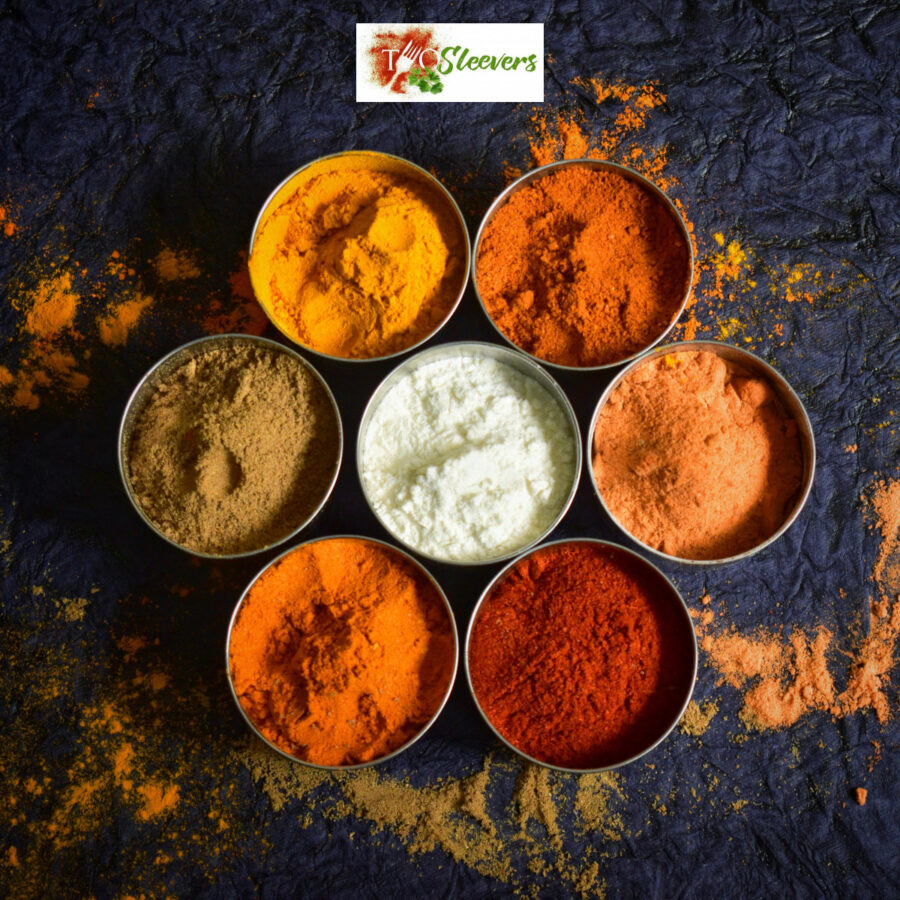
Most dried herbs and mild spices can be doubled, but salt, cayenne, chile powder, hot sauce, and other powerful seasonings require more caution.
When doubling a recipe:
- Double mild herbs and spices when appropriate.
- Start with approximately 1½ times the salt.
- Start with 1½ times the spicy ingredients.
- Taste and add more after cooking.
- Consider the salt already present in broth, canned food, sauces, and seasoning blends.
Pressure cooking can concentrate some flavors, while ingredients such as broth or canned tomatoes may contribute more salt than expected.
When halving a recipe, reduce the spices and seasonings proportionally, but taste the food before making a final adjustment.
Should You Double The Cooking Time?
Usually, no.
Keep the original pressure cooking time when:
- You are doubling the number of similarly sized pieces.
- The ingredients are cut to the same dimensions.
- You are using the same pressure setting.
- The scaled recipe still fits safely.
- The release method remains the same.
Reconsider the cooking time when:
- Individual pieces are larger or thicker.
- You changed from fresh to frozen ingredients.
- You changed the cut of meat.
- You switched from diced meat to a whole roast.
- You substituted a different type of rice, bean, pasta, or grain.
- You changed the pressure level.
- You changed the pressure release method.
The recipe quantity is not the same thing as ingredient size.
Does The Pressure Release Time Change?
The release method should generally remain the same, but the amount of time required for a natural pressure release may increase with a fuller pot.
A large pot of soup, beans, or meat holds more heat than a smaller batch. It can take longer for the pressure to fall naturally.
Natural Pressure Release
Natural pressure release is commonly used for:
- Beans and lentils
- Large cuts of meat
- Foamy foods
- Soups
- Recipes that benefit from resting
Food continues to cook during a natural release. A larger batch may stay hot longer, which can affect delicate ingredients.
Quick Pressure Release
Quick pressure release is often used for:
- Seafood
- Tender vegetables
- Pasta
- Foods that overcook quickly
- Multistep recipes
Do not use quick release solely because you are impatient with a doubled recipe. A very full pot containing soup, grains, beans, or other foamy ingredients can spray hot liquid through the steam valve.
Follow the recipe and your manufacturer's safety instructions. This guide to Instant Pot NPR versus QPR explains which release method works best for different foods.
How To Double Instant Pot Meat Recipes
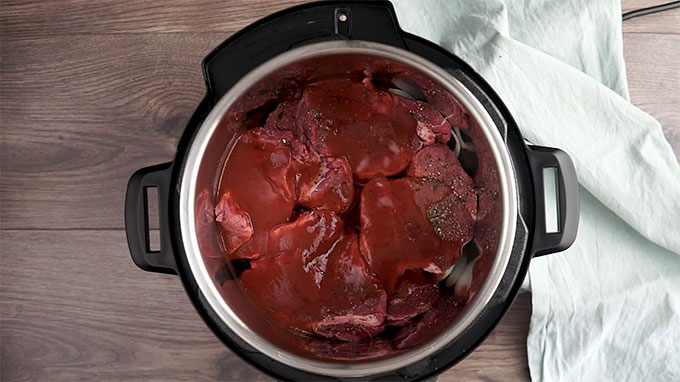
Meat recipes are often among the easiest to scale because cooking time depends heavily on the size and thickness of each piece.
Keep The Pieces The Same Size
If a recipe calls for 1-inch chicken pieces, cut the doubled amount into 1-inch pieces. Do not use larger chunks simply to save preparation time.
Do Not Crowd During Sautéing
Brown meat in batches. Overcrowding the inner pot can cause the meat to steam instead of brown.
Remove each browned batch to a plate, then combine everything before pressure cooking.
Deglaze The Pot
After sautéing, add some of the recipe's thin liquid and scrape the bottom thoroughly. Any browned food stuck to the liner can trigger an overheating or burn warning.
Consider The Sauce
A doubled meat recipe does not always need twice the pressure-cooking liquid. Chicken, beef, pork, and vegetables can release a significant amount of moisture.
My Instant Pot Butter Chicken is a good example of why you should follow the tested liquid quantities and layering instructions instead of treating every sauce ingredient the same way.
How To Halve Instant Pot Meat Recipes
Keep the meat pieces the same size and use the original pressure cooking time.
The smaller amount may reach pressure and release pressure more quickly. This can slightly reduce the total amount of carryover cooking, but you should not automatically add time to compensate.
If the recipe contains very little cooking liquid, make sure halving it does not reduce the liquid below your model's minimum.
How To Double Instant Pot Soup And Stew
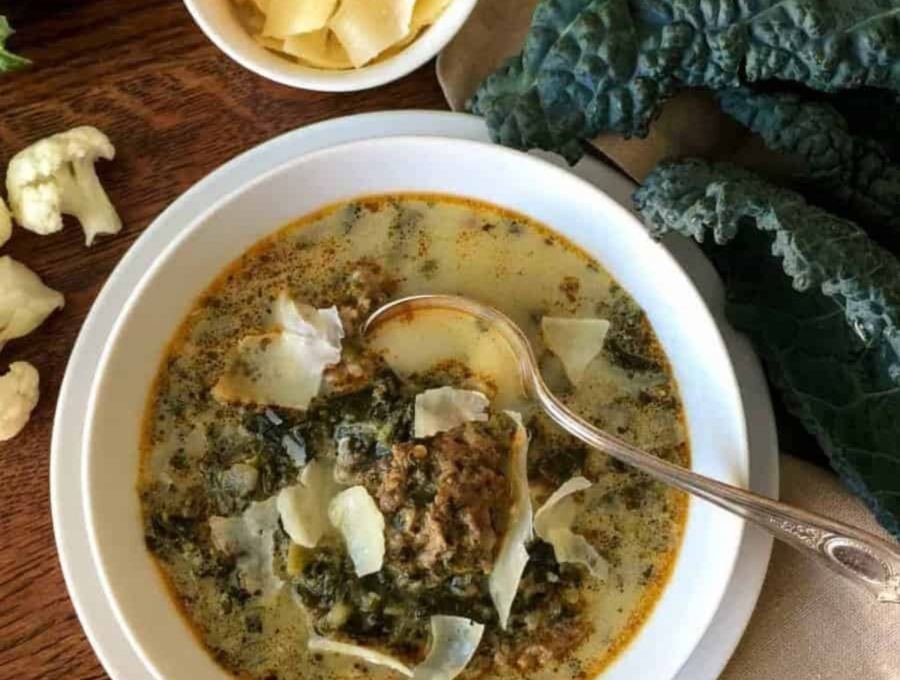
Soups can often be doubled, but capacity becomes the biggest concern.
Before doubling:
- Add up the approximate volume of the ingredients.
- Account for vegetables, meat, grains, or beans that may expand.
- Keep the finished quantity below the appropriate fill line.
- Use the same pressure cooking time when the food pieces remain the same size.
- Expect a longer preheating and natural release.
If the soup contains pasta, rice, beans, barley, or lentils, it may not be suitable for a full doubling in your existing cooker.
Try a flexible recipe such as Creamy Chicken Soup when you want a pressure cooker soup that can be adapted with ingredients you already have.
How To Scale Instant Pot Rice Recipes
Rice should be scaled according to the tested rice-to-water ratio rather than by guessing.
For direct-pot rice, increase or decrease the rice and water together while keeping the cooking time and release method the same.
Different kinds of rice require different ratios and cooking times. Do not substitute brown rice, jasmine rice, arborio rice, sushi rice, or wild rice without adjusting the complete method.
Use this guide to Instant Pot Basmati Rice or browse these Instant Pot rice and grain recipes for tested ratios.
Important Rice Scaling Tips
- Rinse the rice as directed.
- Drain it thoroughly after rinsing.
- Scale the water according to the tested ratio.
- Keep the programmed cooking time the same.
- Use the specified pressure release.
- Leave room for expansion.
- Do not exceed the pressure-cooking fill limit.
- Do not substitute rice varieties without changing the instructions.
One-pot rice dishes such as Instant Pot Chicken Biryani depend on carefully balanced meat, rice, liquid, and cooking time. Scale these recipes only when the increased batch fits safely, and the ratios remain intact.
How To Scale Instant Pot Pasta Recipes
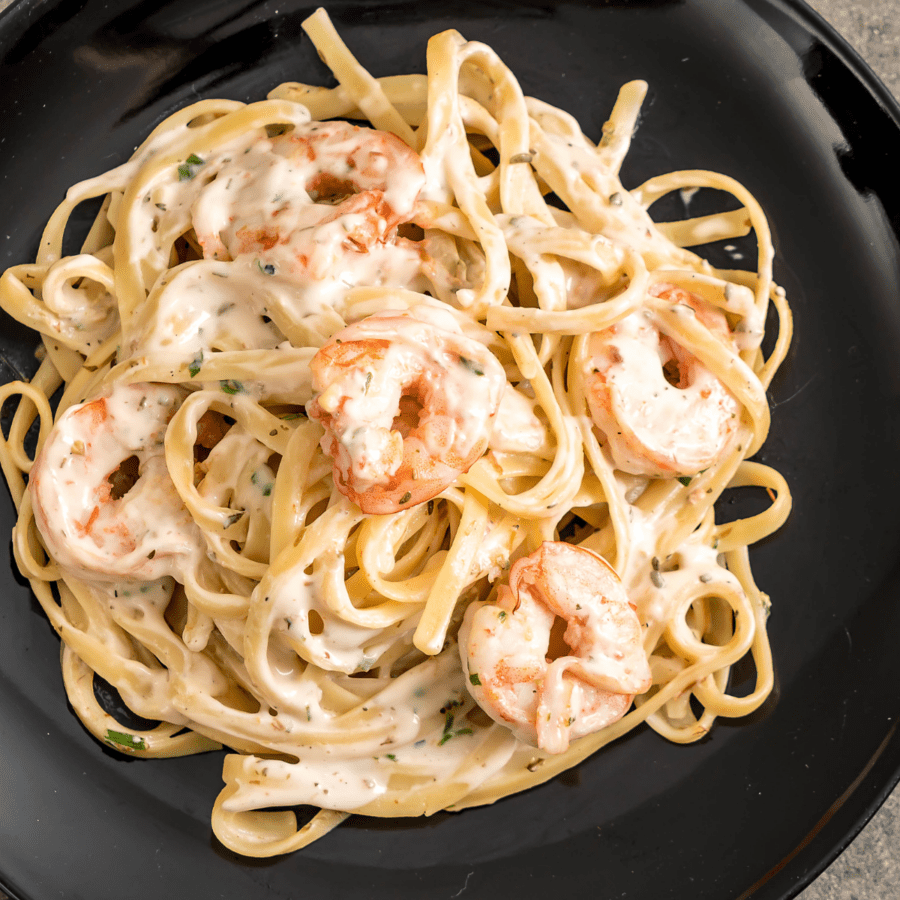
Pasta can be less forgiving than meat because small timing and liquid changes can produce mushy, dry, or unevenly cooked noodles.
When doubling Instant Pot pasta:
- Keep the pasta-to-liquid ratio specified by the recipe.
- Keep the noodles arranged as directed.
- Do not exceed the fill line.
- Keep thick tomato sauce away from the bottom when instructed.
- Use the original pressure cooking time.
- Use the same release method.
- Account for additional carryover cooking in a fuller pot.
When halving pasta, make sure the reduced liquid is still sufficient to create pressure and adequately hydrate the noodles.
For a tested method, try this Instant Pot Pesto Pasta or choose another recipe from the pour-and-cook collection.
How To Double Beans And Lentils
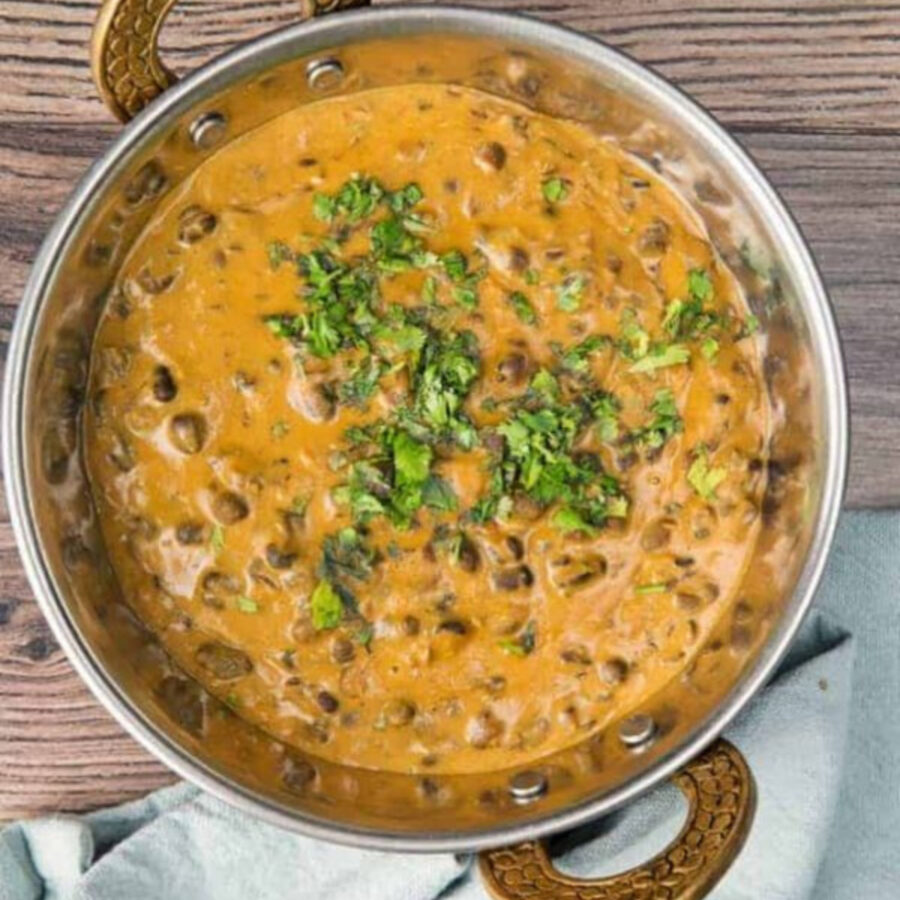
Dried beans, lentils, and legumes expand as they cook, so pot capacity is especially important.
When scaling them:
- Do not exceed the fill limit specified for expanding or foamy foods.
- Use the tested bean-to-water ratio.
- Keep the pressure cooking time appropriate for that type of bean.
- Use the same natural or timed release.
- Expect the larger pot to take longer to depressurize.
- Do not use quick release when the recipe warns against it.
Different beans require different cooking times. Soaked and unsoaked beans may also need different methods.
Use this guide to cooking beans in the Instant Pot before attempting to scale a bean recipe.
Should You Double Dairy Ingredients?
Do not add dairy before pressure cooking unless the tested recipe specifically instructs you to do so.
Milk, cream, yogurt, and cheese can separate, scorch, or contribute to a burn warning. Many Instant Pot recipes add dairy after the pressure has been released.
When doubling a recipe, you can usually double the dairy that is stirred in after pressure cooking. Add it gradually and adjust the consistency as needed.
When halving, reduce the finishing dairy proportionally.
Should You Double Cornstarch Or Other Thickeners?
Do not pressure cook a large quantity of cornstarch, flour, or another thickener unless the recipe was specifically developed that way.
A thick mixture may not circulate properly or create enough steam to bring the cooker to pressure.
Instead:
- Pressure cook the recipe with the required thin liquid.
- Release pressure according to the recipe.
- Remove delicate food if necessary.
- Select Sauté.
- Add the thickener gradually.
- Simmer until the sauce reaches the desired consistency.
A doubled recipe may not require exactly twice as much thickener. Start with less, allow it to activate, and add more only if needed.
How To Scale Pot-In-Pot Recipes
Pot-in-pot cooking uses a separate heatproof container positioned on a trivet inside the pressure cooker.
When scaling a pot-in-pot recipe:
- Keep the required water in the main liner.
- Do not halve the water below the trivet simply because you halved the food.
- Make sure the inner container fits without blocking the lid or valves.
- Do not overfill the inner container.
- Leave room for foods such as rice, cake, or grains to expand.
- Keep the original cooking time when the food depth and container remain similar.
A much deeper layer of food may cook differently, even when the total quantity fits.
What Should Not Be Doubled In An Instant Pot?
Avoid doubling a recipe when:
- It would exceed the pressure-cooking fill line.
- It contains a large quantity of foamy or expanding food.
- The original recipe already fills most of the cooker.
- It is a delicate pasta recipe without scaling instructions.
- It is a cake, custard, cheesecake, or another recipe dependent on pan dimensions.
- The pot-in-pot container cannot hold the larger amount safely.
- The recipe relies on very precise layering.
- Doubling would place thick sauce directly against the bottom.
- The recipe specifically says not to double it.
When in doubt, prepare two separate batches. Pressure cooking two reliable batches is better than dealing with an overfilled cooker, burn warning, or unevenly cooked meal.
Common Mistakes When Scaling Instant Pot Recipes

Doubling The Cooking Time
Twice as much food does not usually need twice as much time under pressure. Increasing the programmed time can overcook meat, rice, pasta, and vegetables.
Halving The Liquid Too Aggressively
Reducing water or broth below your model's minimum can prevent the cooker from reaching pressure.
Doubling Every Drop Of Liquid
Meat and vegetables release moisture during pressure cooking. Doubling liquid that exists only to create steam can leave the finished dish watery.
Ignoring The Fill Line
Food must remain below the appropriate pressure-cooking limit, including after expansion.
Increasing The Size Of The Pieces
The same number of larger pieces may require more cooking time. Keep food dimensions consistent with the original recipe.
Stirring Thick Sauce Into The Bottom
Tomato sauce, tomato paste, cream soup, and other thick ingredients may scorch when placed against the heating surface. Follow the recipe's layering instructions.
Forgetting To Deglaze
If you sauté ingredients, scrape every browned bit from the bottom before pressure cooking.
If your cooker displays an overheating warning, read this guide to the Instant Pot burn message.
Changing The Release Method
Natural release and quick release are part of the tested cooking time. Switching methods can leave food undercooked or overcooked.
Step-By-Step Method For Doubling An Instant Pot Recipe
- Read The Complete Recipe. Identify the cooker size, fill level, liquid, pressure, cooking time, release method, and any layering instructions.
- Check Capacity. Estimate the increased volume and expansion before adding anything to the pot.
- Double The Main Ingredients. Increase the meat, vegetables, grains, beans, and serving liquids when appropriate.
- Evaluate The Thin Liquid. Determine whether it is part of the final dish or included primarily to generate pressure.
- Adjust Seasonings Carefully. Start below a full doubling for salt and very spicy ingredients.
- Keep Food Pieces Consistent. Cut ingredients to the dimensions specified in the recipe.
- Sauté In Batches. Avoid overcrowding and deglaze the liner completely.
- Layer Correctly. Keep thick sauces away from the bottom when directed.
- Use The Original Pressure Time. Do not double the programmed cooking time.
- Use The Original Release Method. Allow additional time for a fuller pot to depressurize.
- Finish And Adjust. Add dairy, thickeners, salt, acid, and fresh herbs after cooking.
Step-By-Step Method For Halving An Instant Pot Recipe
- Halve The Main Ingredients. Reduce the meat, vegetables, grains, and sauce components.
- Confirm The Minimum Liquid. Do not reduce thin liquid below the requirement for your model.
- Keep The Original Food Size. Do not make the pieces smaller unless you also intend to change the cooking time.
- Use The Original Pressure Setting. Keep High or Low Pressure as written.
- Keep The Original Cook Time. Quantity alone does not usually require a shorter time.
- Use The Same Release Method. Natural release and quick release affect the final texture.
- Taste Before Finishing. Adjust salt, spices, dairy, and thickener after cooking.
Frequently Asked Questions
Do You Double The Water When Doubling An Instant Pot Recipe?
Sometimes.
Double the water when it is part of a tested ratio or an essential part of the finished dish, such as soup broth or the water required for rice.
Do not automatically double water that is included only to help the cooker build pressure. Always stay below the appropriate fill line.
Do You Cut The Cooking Time In Half When Halving An Instant Pot Recipe?
No. Keep the original pressure cooking time if the ingredient type, piece size, pressure setting, and release method remain unchanged.
The smaller recipe will probably reach pressure more quickly, so its total preparation time may be shorter.
Does A Full Instant Pot Take Longer To Cook?
The programmed pressure time usually remains the same, but a fuller Instant Pot takes longer to heat, reach pressure, and naturally release pressure.
Can You Double A Recipe In A 6-Quart Instant Pot?
It depends on the original volume and the type of food. A small recipe may fit when doubled, while a soup, pasta, bean, or grain recipe may exceed the permitted fill level.
Check the inner pot markings and model-specific manual before cooking.
Can You Double A Recipe In An 8-Quart Instant Pot?
An 8-quart cooker has more capacity, but the recipe must still stay below its pressure-cooking fill line. The larger model may also require more minimum liquid than a smaller model.
Consult the manual for the exact cooker.
Can I Halve A Recipe In An 8-Quart Instant Pot?
Yes, but make sure the recipe contains enough thin liquid for the larger cooker. A small recipe developed for a 3-quart or 6-quart model may need additional water or broth to reach pressure in an 8-quart cooker.
Can You Double Instant Pot Rice?
Yes, if you maintain the tested rice-to-water ratio, keep the original cooking time and release method, and stay below the limit for expanding foods.
Can You Double Instant Pot Pasta?
Some pasta recipes can be doubled, but pasta is sensitive to liquid, layering, cooking time, and carryover cooking. Use a tested recipe and do not exceed the fill line.
Can You Double Instant Pot Beans?
Yes, if the beans and liquid fit below the appropriate limit for expanding and foamy foods. Keep the original pressure time and release method for that specific bean.
Why Is My Doubled Instant Pot Recipe Watery?
You may have doubled liquid that was needed only to generate pressure. Meat and vegetables also release moisture while cooking.
Remove the solid ingredients and use Sauté to reduce the sauce. Do not omit the minimum thin liquid during the pressure-cooking stage.
Why Did My Doubled Recipe Get A Burn Warning?
Possible causes include:
- The pot was overfilled.
- There was not enough thin liquid.
- Thick sauce touched the bottom.
- Food remained stuck after sautéing.
- Starchy ingredients settled against the liner.
- The sealing ring or valve allowed steam to escape.
Cancel the cycle and wait until the cooker is safely depressurized before opening it.
Should I Change The Natural Release Time?
Use the release time stated in the recipe. A doubled batch may take longer to depressurize completely, even after the specified resting period.
If the recipe calls for a 10-minute natural release followed by a quick release, wait 10 minutes, then carefully release the remaining pressure according to your model's instructions.
More Helpful Instant Pot Guides
If this guide to doubling and halving Instant Pot recipes was helpful, explore:
- Instant Pot Troubleshooting Guide
- Natural Pressure Release Versus Quick Release
- Why Did My Food Burn In The Instant Pot?
- How To Cook Beans In The Instant Pot
- Instant Pot Rice And Grain Recipes
- Pour-And-Cook Recipes
- Instant Pot Tips And Tricks
- All Instant Pot Recipes
The key to scaling Instant Pot recipes is to change the quantity without changing the food size, pressure setting, or cooking method. Keep the original pressure cooking time, protect the minimum liquid requirement, stay below the proper fill line, and follow the tested release method.
If you found this guide helpful, share it with your friends on Facebook and Pinterest so they can confidently double or halve their favorite pressure cooker recipes too.

Leave a Reply