
Sopa de Palmito is a creamy Brazilian hearts of palm soup with a smooth texture and a pleasantly tangy, savory flavor. This Instant Pot version requires very little hands-on preparation and transforms a handful of simple ingredients into an elegant soup.
Serve it as a light main course, a starter for a Brazilian-inspired dinner, or a creamy side dish with warm Brazilian pão de queijo.
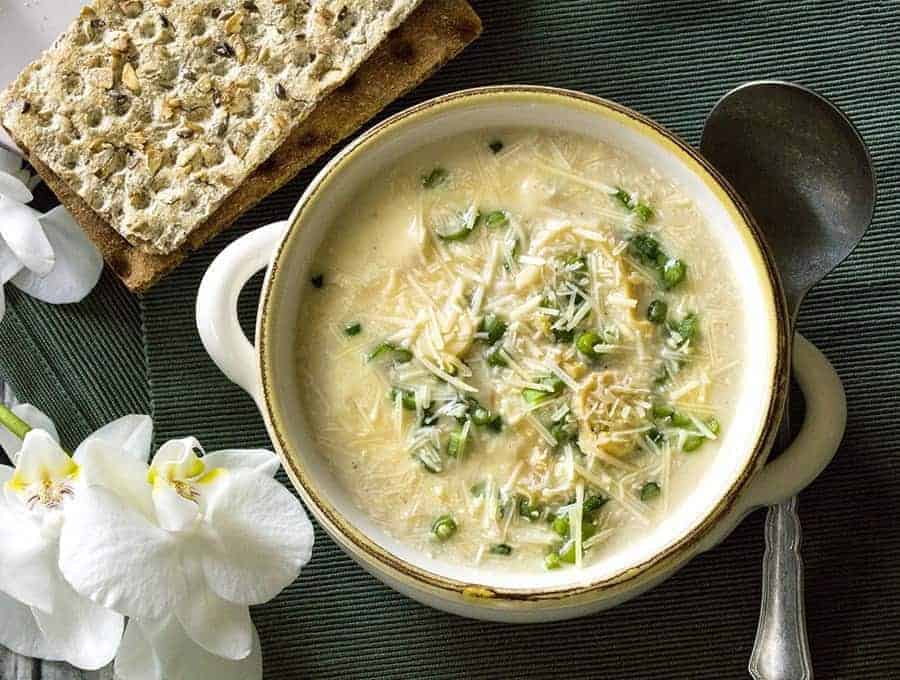
Why You'll Love This Hearts of Palm Soup
- Fast. The soup pressure cooks for only 5 minutes.
- Easy. Add the base ingredients to the Instant Pot, cook, blend, and finish with cream and cheese.
- Creamy. Heavy cream and Parmesan give the blended soup a rich, silky texture.
- Low Carb. Only 6 net carbs per serving.
- Versatile. Serve sopa de palmito as an appetizer, side dish, lunch, or light dinner.
- Pour and Cook. There is no complicated sautéing or browning required.
What Is Sopa de Palmito?
Sopa de palmito is a creamy soup made with hearts of palm, known as palmito in Portuguese. Hearts of palm are commonly used in Brazilian and other Latin American dishes, including soups, salads, savory pies, and vegetable preparations.
Traditional versions vary. Some are thickened with flour, while others use cream, milk, cheese, or blended vegetables. This recipe is an easy Instant Pot adaptation made with canned hearts of palm, broth, heavy cream, Parmesan, and nutmeg.
The result is a smooth, mildly tangy soup that tastes much more elaborate than the preparation suggests.
What Are Hearts of Palm?
Hearts of palm are harvested from the tender inner portion of certain palm plants. They have a mild, slightly tangy flavor and a firm but tender texture that is sometimes compared to artichoke hearts.
For this soup, canned hearts of palm are especially convenient because they are already tender. Once pressure cooked and blended, they give the soup body and a smooth, creamy consistency.
You can usually find canned or jarred hearts of palm near the canned vegetables, artichoke hearts, olives, or international foods in larger grocery stores.
Because brands differ in saltiness and acidity, check the label before using the liquid from the can. The recipe should be retested with a specific measured quantity of packing liquid rather than relying on an entire undrained can.
Ingredients You'll Need
- Hearts of Palm. These provide the signature flavor and most of the body of the soup.
- Onion. Adds mild sweetness and a savory base that balances the tanginess of the hearts of palm.
- Garlic. Adds aromatic flavor.
- Chicken Broth. Provides the liquid base.
- Kosher Salt. Enhances the other flavors. Add it carefully because canned hearts of palm, broth, and Parmesan can all contribute sodium.
- Black Pepper. Adds warmth and balances the rich cream.
- Heavy Cream. Gives the finished soup its rich, silky texture.
- Parmesan Cheese. Adds saltiness, body, and savory flavor. Finely grated Parmesan should incorporate more smoothly than thick shreds.
- Ground Nutmeg. A small amount adds warmth and complements the cream without making the soup taste sweet.
- Green Onions. Add color and a fresh finish to the blended soup.
How to Make Sopa de Palmito in the Instant Pot
- Prepare the hearts of palm. Cut the hearts of palm into evenly sized chunks. Place them in the Instant Pot with the exact amount of reserved packing liquid confirmed during testing.
- Add the base ingredients. Add the chopped onion, measured garlic, broth, salt, and black pepper.
- Pressure cook. Lock the lid in place and set the valve to Sealing. Cook at high pressure for 5 minutes.
- Release the pressure. When the cooking time is complete, allow the pot to sit undisturbed for 10 minutes. Carefully release any remaining pressure.
- Blend the soup. Open the lid and use an immersion blender to purée the soup until smooth. Keep the head of the blender below the surface to reduce splashing.
- Add the finishing ingredients. Stir in the heavy cream, Parmesan, and nutmeg. Blend briefly until everything is evenly incorporated.
- Taste and serve. Taste the soup after adding the Parmesan, then adjust the salt and pepper if needed. Garnish with chopped green onions and serve warm.
If you are still learning how pressure cooking works, browse these Instant Pot recipes for more easy ways to use your pressure cooker.
Tips and Tricks for Making Brazilian Hearts of Palm Soup
- Check the sodium first. Canned hearts of palm, broth, and Parmesan all contain varying amounts of salt. Use low-sodium broth if the hearts of palm are packed in a salty brine.
- Add dairy after pressure cooking. Cream and Parmesan should be added after releasing the pressure to reduce the risk of separation or scorching.
- Blend carefully. Hot soup can splash. Keep the immersion blender submerged and begin blending at the lowest speed.
- Do not boil the finished soup. Once the cream and Parmesan are added, heat the soup gently.
- Adjust the consistency gradually. If the soup is too thick, add broth a few tablespoons at a time. If your soup is thinner than you'd like, try these easy ways to thicken soup without flour or cornstarch.
- Season at the end. Parmesan can add substantial salt, so taste the finished soup before adding more.
- Use freshly grated Parmesan. Pre-shredded cheese sometimes contains anti-caking ingredients that can prevent it from melting smoothly.
Why Is My Hearts of Palm Soup Too Thin?
The amount of packing liquid and broth can affect the final consistency. If the soup is too thin, first blend it thoroughly because the hearts of palm provide much of the soup's body.
If it remains thinner than desired, simmer it uncovered on Sauté Low for a few minutes, stirring frequently. Do not use a flour or cornstarch thickener unless that variation has been tested.
Why Is My Sopa de Palmito Too Thick?
Hearts of palm soup can thicken as it cools, particularly after adding Parmesan. Stir in warm broth a few tablespoons at a time until the soup reaches your preferred consistency.
Avoid adding too much liquid at once. It is much easier to thin the soup gradually than to correct an overly watery soup.
Why Does My Soup Taste Too Salty?
The salt may be coming from several sources rather than the measured salt alone. Hearts of palm packing liquid, chicken broth, and Parmesan can all contain considerable sodium.
Use low-sodium broth and check the packing liquid before adding it. For the most reliable result, the recipe should specify the brand or sodium range used during testing.
Why Does My Soup Taste Sour?
Hearts of palm may be packed with salt and citric acid, which can give the soup a sharper flavor. The current recipe uses the liquid from the can, so the acidity may vary by brand.
Variations
- Vegetarian Sopa de Palmito. Replace the chicken broth with vegetable broth.
- Dairy-Free Hearts of Palm Soup. Use full-fat coconut milk in place of heavy cream and omit or replace the Parmesan. Coconut milk will make the soup taste different from the dairy version, but will still be delicious.
- Chunky Hearts of Palm Soup. Reserve a portion of the chopped hearts of palm and stir them into the blended soup for additional texture.
- Spicy Sopa de Palmito. Add cayenne, crushed red pepper, or fresh chile.
- Extra-Herby Soup. Garnish with parsley, cilantro, chives, or additional green onions after confirming which herb best complements the base recipe.
What to Serve With Sopa de Palmito
Warm Brazilian pão de queijo is an excellent choice for dipping into the creamy soup. The chewy cheese bread complements the tangy hearts of palm without overpowering them.
For a larger Brazilian-inspired meal, serve smaller portions of the soup before Brazilian moqueca or galinhada. Finish the meal with refreshing Brazilian lemonade or sweet air fryer pineapple.
You can find even more ideas in the complete collection of Brazilian recipes.
How Long Does Sopa de Palmito Last?
Allow leftover soup to cool, then transfer it to a shallow airtight container. Refrigerate it promptly and use it within the storage period confirmed during recipe testing.
The soup will likely thicken in the refrigerator. Reheat it gently on the stovetop over low to medium-low heat, stirring frequently. Add a small amount of broth or cream if needed to restore the original consistency.
Individual servings can also be reheated in the microwave. Use short intervals, stirring between each one so the cream and Parmesan heat evenly.
Can You Freeze Hearts of Palm Soup?
Cream- and cheese-based soups can separate or become grainy after freezing.
A better make-ahead option is freezing the pressure-cooked and blended soup before adding the cream and Parmesan. Add the dairy while reheating.
Frequently Asked Questions
What Does Sopa de Palmito Taste Like?
Sopa de palmito has a creamy, savory, and mildly tangy flavor. Hearts of palm are relatively mild, while the Parmesan, black pepper, and nutmeg give the soup greater depth.
Do I Need to Drain Hearts of Palm?
This recipe uses both the hearts of palm and their packing liquid.
Can I Use Jarred Hearts of Palm?
Jarred hearts of palm may work, but they can differ from canned products in size, saltiness, texture, and acidity.
Can I Make This Soup Vegetarian?
Use vegetable broth instead of chicken broth for a vegetarian version. The macros and flavors will vary.
Can I Use a Countertop Blender?
Yes. Allow the soup to cool slightly, work in small batches, remove or vent the center cap, and cover the opening loosely with a folded kitchen towel. Never completely seal hot soup inside a countertop blender.
Can Sopa de Palmito Be Served Cold?
Some hearts of palm soups are served chilled, but this particular version has only been prepared hot.
Is Hearts of Palm Soup Keto-Friendly?
This tasty low carb soup has 7 grams of carbohydrates and 1 gram of fiber per serving.

More Instant Pot Recipes
If this creamy soup has you looking for more low-effort meals, try my low-carb Italian sausage kale soup or this easy Pressure Cooker IKEA Swedish Meatballs Soup.
For more Instant Pot inspiration:
- Instant Pot Butter Chicken is a fast, flavorful dinner and one of the most popular recipes on the site.
- Pressure Cooker Rice and Dal cooks lentils and rice together for a convenient vegetarian meal.
- Greek Lentils and Rice is another simple way to turn pantry staples into a hearty dinner.
- Browse more vegetarian Instant Pot recipes for easy meatless meal ideas.
- Instant Pot Khichadi is classic comfort food made with rice and lentils.
- Instant Pot Shrimp Risotto delivers creamy risotto without constant stovetop stirring.
- Keto Buffalo Chicken Casserole is an easy option for anyone browsing low-carb recipes.
- Low-Carb Chicken Biryani replaces traditional rice with cauliflower rice.
- Instant Pot Chicken and Mushrooms combines tender chicken with a savory mushroom sauce.
- Instant Pot Pork Chops and Rice makes the protein, vegetables, and rice together.
- Instant Pot Zucchini Lasagna gives you the flavors of lasagna without traditional noodles.
- Instant Pot Haluski is a comforting combination of cabbage and noodles.
For a more focused collection, browse the best Instant Pot soup recipes, keto soup recipes, or vegetarian soup recipes.
If you love this Instant Pot Sopa de Palmito as much as I do, share the recipe with your friends on Facebook and Pinterest so they can try it too.

Ingredients
- 1 14.5 ounce (1 14.5 ounce) can hearts of palm, undrained
- 1 cup (160 g) onions, chopped
- 1 tablespoon Garlic, minced
- 2.5 cups (587.5 g) Chicken Broth
- 1 teaspoon (1 teaspoon) Kosher Salt
- 1.5 teaspoons (1.5 teaspoons) Ground Black Pepper
For Finishing
- ¾ cup (178.5 g) Heavy Cream
- ½ cup (50 g) shredded parmesan cheese
- ½ teaspoon (0.5 teaspoon) Ground Nutmeg
- ¼ cup (25 g) Chopped Green Scallions
Instructions
- Cut up the hearts of palm into chunks and place into the inner liner of your instant pot, along with liquid from the can.
- Add onions, garlic, chicken broth, salt and pepper.
- Cook on high pressure for 5 minutes, and let the pot sit undisturbed for 10 minutes
- Release all remaining pressure.
- Using an immersion blender, purée the soup until smooth.
- Stir in the heavy cream, cheese, and nutmeg and pulse the immersion blender until everything is mixed well. If you are dairy-free, you can try full-fat coconut milk instead.
- Garnish with chopped scallions and serve.
Get support & connect with our community on Facebook!
Nutrition
Don't forget to check out my Best-selling Instant Pot Cookbooks!
Indian Instant Pot, Keto Instant Pot, Instant Pot Fast and Easy, Healthy Instant Pot & Vegetarian Instant Pot.



I have made this soup several times and love it. It also is wonderful served cold, even better than hot if you like cold soups.
The ingredients don’t list garlic, but the instructions do. Being a careful follower of Urvashi’s cooking, I put lots in anyway! It’s delicious.
I love the soup bowl. Where did you get it?
Hmm good question. Sur la Table I think?
can this soup be frozen/
Yes but reheat gently so the cream doesn’t separate
This was so delicious I can’t stop thinking about making it again! And so simple. My family raves and it surpassed my avgolemono as my family’s favorite soup.
Oh that is fantastic!
I just made this and it is DEVINE!!! Thank you!
I made this last week and enjoyed it very much. I didn't change the recipe in any way. This is one I'll keep and make again.
How much garlic do you suggest? I don't see it in the ingredient list but it is in the directions. I'm looking forward to trying this soon - I love hearts of palm!
6-8 cloves or 1 tablespoon minced garlic is what I’d recommend
Seems like it's keto too, but the recipe doesn't say that. Is it? It's pretty low carb.
It is actually. I should prob code it that way
Just wondering about those calories! 231kcal = 231,000 per serving! Can you confirm that??
alaooks rich, but not that rich!
Not true of course. Not sure why the recipe card is showing that. It’s 231 calories
For some reason, especially on European nutrition labels, the abbreviation for "calories" is "kcal". In this instance, "k" doesn't mean "1,000" as in "kilobytes". =)