

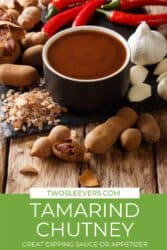

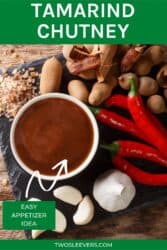

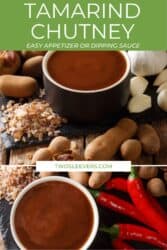
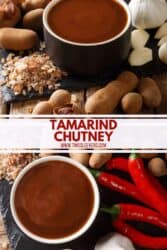


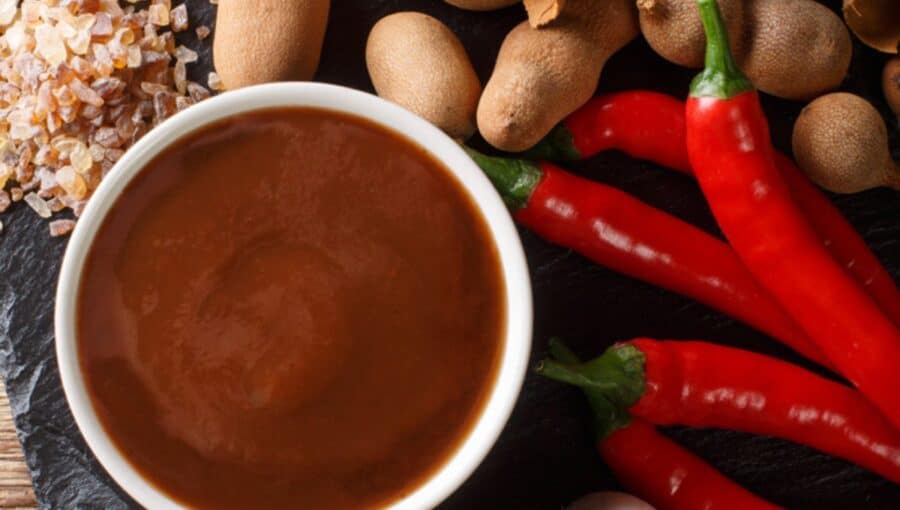
This easy Tamarind Sauce is sweet, tangy, warmly spiced, and ready in about 10 minutes. Made with concentrated tamarind paste, cumin, coriander, cayenne, and sweetener, it works as an Indian tamarind chutney for samosas and pakoras or as a flavorful glaze for chicken, vegetables, and grilled meats.
Why You'll Love This Tamarind Sauce
- Fast. Prepare and cook the sauce in about 10 minutes.
- Easy. Mix the ingredients and microwave until the flavors combine.
- Customizable. Adjust the sweetness, heat, tartness, and consistency to taste.
- Versatile. Serve it as a dipping sauce, Indian chutney, glaze, or condiment.
- Make Ahead. Prepare it in advance and keep it refrigerated until needed.
What Is Tamarind?
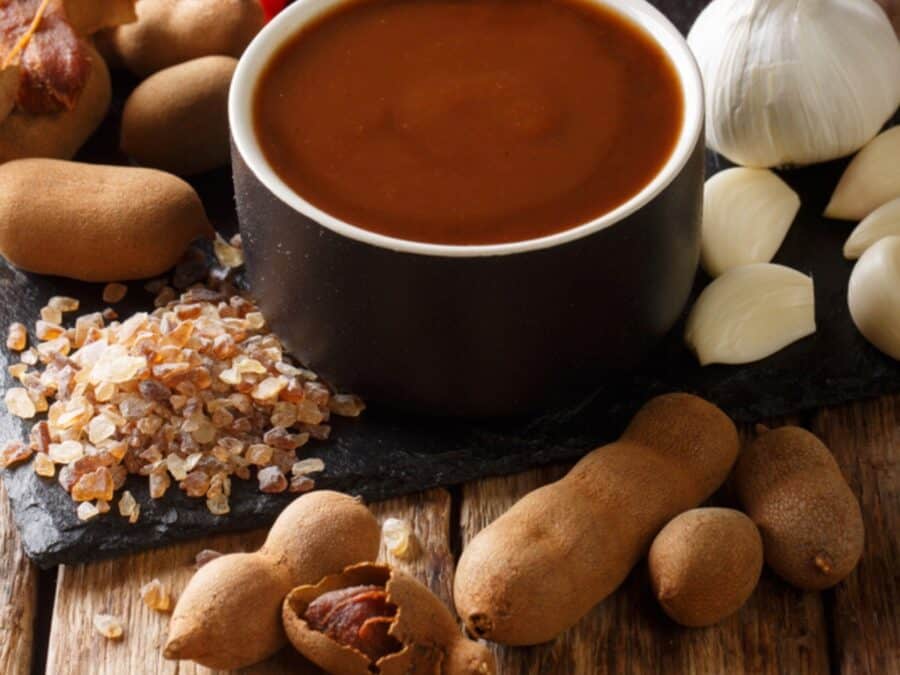
Tamarind is a tree that produces edible tropical fruit. The tamarind tree grows pods that have an edible pulp inside.
Tamarind concentrate is what I used for this tamarind chutney sauce. It can be difficult for some to find in stores. If you have trouble finding it, you can purchase tamarind concentrate here.

What Does Tamarind Sauce Taste Like?
The flavor of tamarind chutney can vary depending on how you adjust the recipe. It can be anything from a sweet sauce or chutney to a tart sauce. Here's how to modify it to your liking:
- Sweet. Add more sweetener of your choice for a sweet tamarind chutney.
- Spicy. Add more cayenne to kick up the spice on this tamarind sauce.
- Tangy. Make the recipe as is. Add more tamarind paste to taste.
If you enjoy building bold flavors from scratch, explore this guide to global spices and sauce blends for homemade seasonings, marinades, chutneys, and sauces that can add depth and variety to recipes from around the world.
What Is Tamarind Sauce Made Of?
This sauce is made mostly of concentrates and spices. Here are the ones I used:
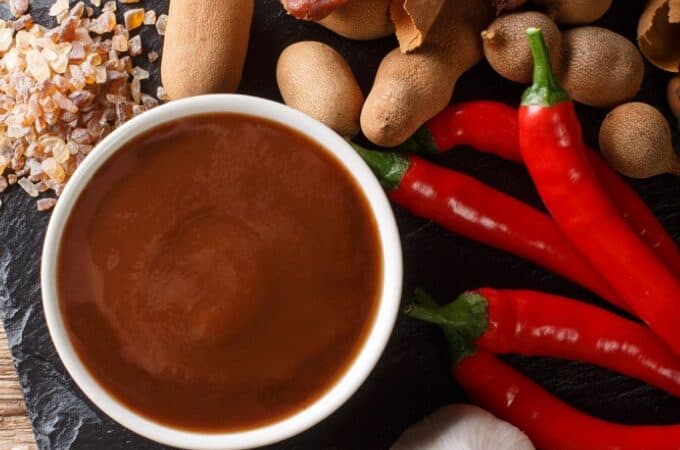
- Concentrated Tamarind Paste. Provides the sauce's characteristic fruity, intensely tart flavor. Use the same type and brand tested for the recipe because concentrations vary. I tested this recipe using Tamicon Tamarind Concentrate. Make sure you level the measuring spoon when adding ingredients for the most accurate results.
- Hot Water. Dilutes the concentrated paste and determines the sauce's finished consistency.
- Kosher Salt. Balances the sour and sweet flavors.
- Cayenne Pepper. Adds clean heat. Reduce it for a milder chutney.
- Agave Nectar. Balances the tart tamarind and helps give the sauce a smooth texture. Ground Cumin. Adds warm, earthy flavor.
- Ground Coriander. Contributes mild citrus and floral notes.
- Splenda. Adds additional sweetness without requiring more agave.
Tamarind products vary considerably in strength. This recipe was tested with concentrated tamarind paste. A thinner tamarind purée may require a larger quantity, so adjust gradually to taste.
Some traditional Indian tamarind chutneys use jaggery (a coarse dark brown sugar made in India by evaporation of the sap of palm trees) and ground ginger, and are cooked for a long time. Some is made from sugarcane juice. Not everyone has those things in their kitchen, so I made it with ingredients that are more easily accessible.
If you are using a weaker tamarind concentrate or purée, begin with 2 tablespoons instead of 1 and reduce the water by 1 tablespoon. Prepare the sauce as directed, then taste and add more tamarind 1 teaspoon at a time until it reaches the desired tartness. Because tamarind products vary significantly by brand, adjust the sweetener, salt, and water after adding more purée to maintain a balanced flavor and consistency.
Can I Make Tamarind Chutney With Dried Tamarind?
Yes, you can. If you can get dried tamarind pods, soak the pods in hot water for 15-20 minutes. Then use your fingers to squeeze out the tamarind pulp.
This will be less concentrated than the tamarind paste that you can buy so you may need to use a ball of tamarind about 3-4 inches in diameter. Soak and squeeze twice.
How To Make Tamarind Sauce
Have you been wondering how to make tamarind chutney? It's as easy as these simple steps:
- Dissolve the tamarind. Add the hot water and concentrated tamarind paste to a microwave-safe bowl. Whisk until no lumps remain.
- Add the seasonings. Stir in the salt, cayenne, agave, cumin, coriander, and Splenda.
- Microwave the sauce. Microwave uncovered for 2½ minutes. Stir carefully, then microwave for another 2½ minutes. Use a bowl large enough to prevent the sauce from bubbling over. If you have a powerful microwave, begin checking the sauce at about 60 seconds on each cooking cycle to ensure the sauce isn't scorching.
- Check the consistency. Remember that the sauce will thicken slightly as it cools. Whisk in warm water, one tablespoon at a time, if it is too thick.
- Adjust the flavor. Add more sweetener for sweetness, cayenne for heat, or diluted tamarind for additional tartness.
- Cool and serve. Let the sauce cool before serving it as a dip, chutney, or glaze.
For a thicker tamarind chutney recipe, use less water. For thinner tamarind sauce or glaze, add more water. Otherwise, it's the same exact recipe.
Tips And Tricks
Making homemade tamarind sauce at home is quick and easy, but a few simple tricks can help you perfect the balance of flavors every time.
- Adjust the consistency. Use less water for a thick chutney-style dip, or more water if you want a pourable glaze.
- Balance the flavors. Taste as you go. Try to add extra sweetener if it's too tart, more cayenne if you like heat, or a pinch more salt to round things out.
- Use fresh spices. Ground cumin and coriander lose potency over time, so using fresh spices makes the sauce more aromatic and flavorful.
Variations
One of the best things about tamarind sauce is how easy it is to customize. Whether you love it sweet, spicy, or extra tangy, here are a few ways to make it your own:
- Sweet- Add more agave nectar, honey, or even jaggery for a rich sweetness that balances the tartness. This version pairs beautifully with fried snacks like samosas or pakoras.
- Spicy- Kick up the cayenne or stir in a little chili powder, red chili flakes, or hot sauce for a bold, fiery bite. This is great with grilled meats, kababs, or wings.
- Tangy- Increase the amount of tamarind paste for a sharper, more tart flavor. Perfect as a glaze for roasted vegetables or as a dipping sauce when you want that extra punch.
What Do You Use Tamarind Sauce For?
When people go into Indian restaurants in the US, they often get served mint chutney and tamarind chutney together with roasted or fried papads.
Though delicious, this is not how it's traditionally consumed. Here are some of the best things to enjoy it with:
- Samosas
- Bhel
- Kachoris
- Kababs
- Dahi Wada
- Savory Potato Patties
- French Fries
- Roasted Cauliflower
Basically, it's good for everything. It's one of the things I suggest most when someone asks what to serve with biryani.
How Long Does It Last?
Allow the sauce to cool to room temperature before refrigerating in a clean, airtight container.
Tamarind sauce typically lasts up to 1 week in the refrigerator. The flavors actually deepen as it sits, making it taste even better after a day or two.
Ensure that you are using a clean utensil each time you retrieve chutney from the jar to avoid introducing bacteria.
Discard it if it develops mold, an off odor, or unexpected fermentation.
Can You Freeze Tamarind Chutney?
For longer storage, you can freeze tamarind sauce in small portions, such as ice cube trays or freezer-safe jars, for up to 3 months.
Just thaw what you need in the refrigerator overnight. Stir well and add water to adjust consistency if needed. Reheat gently in the microwave or on the stovetop before serving.
Frequently Asked Questions
Tamarind paste vs Tamarind concentrate vs Tamarind sauce difference
The difference between tamarind paste vs tamarind concentrate vs tamarind sauce mostly comes down to strength and added ingredients.
Tamarind paste is usually pure (or near-pure) tamarind pulp with a thick texture and tangy flavor, making it the most common base for a homemade tamarind sauce.
Tamarind concentrate is a more reduced, stronger form (often thicker and more intense), so you typically use less and dilute it when following a tamarind sauce recipe.
Tamarind sauce is a ready-to-use, seasoned product that is often sweetened and sometimes salted/spiced, and is meant for quick use as a tamarind dipping sauce or shortcut for dishes like tamarind sauce for pad thai. It can be less tart and sweeter than a sauce made from paste or concentrate.
How to thin tamarind sauce
To thin the tamarind sauce, whisk in warm water or broth a tablespoon at a time until it reaches the consistency you want. This works best for a tamarind dipping sauce or tamarind sauce for pad thai when it's too thick to coat noodles evenly.
If you're starting from tamarind paste, dilute it with warm liquid first, then adjust the seasoning so it doesn't taste washed out. If you used tamarind concentrate, add a bit more water and stir well since it's extra strong.
Warm the sauce gently and whisk to smooth out any lumps, then taste and rebalance the sweet-tart flavor if needed.
My tamarind sauce is too sour. How do I balance it?
If your homemade tamarind sauce is too sour, balance the acidity by adding a sweetener in small increments (½-1 tsp at a time), which is the quickest fix for a sweet-and-sour tamarind sauce or tamarind sauce for pad thai.
Next, add a tiny pinch of salt to round out the flavor and reduce the sharp "pucker" effect, then simmer for a minute so the taste smooths out.
If it's still aggressively tart, dilute slightly with a splash of warm water to soften the intensity. This is especially helpful if you started with tamarind concentrate, which is stronger than tamarind paste. Taste after each adjustment until it lands in that sweet-tangy balance.
What can I use if I don't have tamarind?
If you don't have tamarind, the best tamarind sauce substitute is a quick sweet-tart combo. Use lime or lemon juice plus a little brown sugar (or another sweetener) to mimic tamarind's tangy, fruity acidity. It's great in an easy tamarind sauce recipe or when you need a shortcut tamarind sauce for pad thai.
For extra depth, add a small splash of vinegar (rice or apple cider) and a pinch of salt to round it out, then taste and adjust until it hits that sweet-and-sour balance.
It won't be identical, but it'll get you very close in marinades, stir-fries, and dipping sauces.
Why Is My Tamarind Sauce Bitter?
If you're wondering why your tamarind sauce is bitter, it's usually because the tamarind base is too concentrated, or the sauce was simmered too long, which can make the tart notes taste harsh.
To fix it, thin the tamarind sauce with a little warm water, then rebalance with a small amount of sweetener and a pinch of salt. Gently warm (don't aggressively boil) and taste as you go until it returns to a smooth, sweet-tangy profile.
Want More Indian Recipes?
It can be hard to find in stores, so it's best to know how to make it whenever you want it, especially since it's so simple! I also make this Indian Green Chutney that's amazing too!
So, if you are looking for the perfect addition to your Indian meal, you HAVE to make this tamarind sauce. If you love it as much as I do, make sure you share it with your friends on Facebook and Pin it to make it again later.
Ingredients
- 1 tablespoon (1 tablespoon) concentrated tamarind paste
- 1/2 cup (1 tablespoon) hot water
- ½ teaspoon (0.5 teaspoon) Kosher Salt
- ½ teaspoon (0.5 teaspoon) Cayenne Pepper
- 1 tablespoon (1 tablespoon) agave nectar
- ½ teaspoon (0.5 teaspoon) Ground Cumin
- ½ teaspoons (0.5 teaspoons) Ground Coriander
- ½ teaspoon (0.5 teaspoon) Splenda
Instructions
- Mix water and tamarind paste together until all lumps have been dissolved.
- Add all other ingredients and stir again.
- Microwave for 2 1/2 minutes, stir well, and continue to microwave for an additional 2 1/2 minutes. If you have a powerful microwave, begin checking the sauce at about 60 seconds on each cooking cycle to ensure the sauce isn't scorching.
- Taste and adjust. You want a good mix of hot (cayenne), sweet (agave & Splenda), spiced (cumin & coriander) and tart (tamarind).
- Serve with fritters, latkes, tater tots, french fries, or use as a glaze for grilled meats and cooked chicken wings.
- If you're making this with tamarind pods, soak the peeled tamarind for 15-20 minutes and then using your fingers or a strainer, remove the tamarind pulp and discard the pith. Then proceed as recommended.
- You can sub honey and sugar for the Agave and Truvia if you don't need to stay low carb.
Get support & connect with our community on Facebook!
Nutrition
Don't forget to check out my other Keto cookbooks.
Keto Instant Pot, Keto Fat Bombs, Sweets, & Treats, and Easy keto in 30 minutes.






seo marketplace
Hola! I've been reading your weblog for a while now and finally
got the bravery to go ahead and give you a shout out from Porter Texas!
Just wanted to say keep up the excellent job!
Seo marketing expert nyc mostly mktg
Wow, that's what I was exploring for, what a stuff!
present here at this blog, thanks admin of this site.
AshleyThompson
This is so yummy when used as a dipping sauce for samosas. A little bit of this and a little bit of mint chutney makes for a perfect appetizer spread!
Roy Calder
Absolute disaster as the moisture went on fire and burned through the mixing bowl. Are you sure it is 1 Tablespoon of water and not 1 Cup?
Kaddie Abdul
Great recipe! You can easily adjust the sweetness and thickness